When you’re ready to water your garden or wash down the patio, the last thing you want is a weak stream coming from your hose or sprinkler.
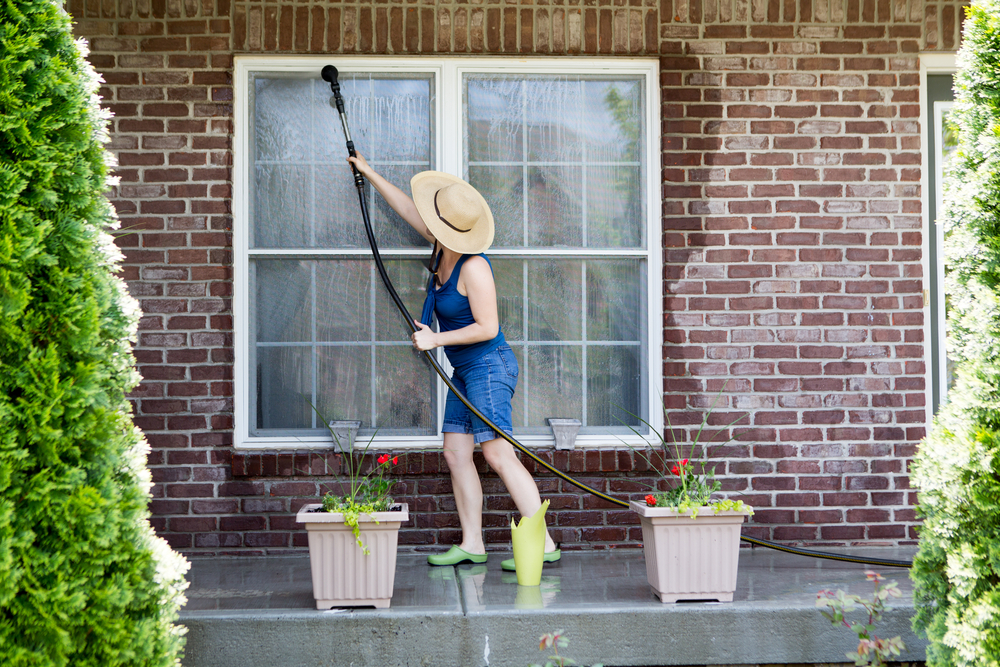
Housewife standing on a patio washing the windows of her house with a hose attachment as she spring-cleans the exterior at the start of the new spring season
Low water pressure outside can turn simple tasks into frustrating chores. And while it’s tempting to call for plumbing repair right away, the fix is often simpler than you’d think.
Here’s how to troubleshoot the problem and get your outdoor water flow back on track.
Problem #1: Your Hose Is Barely Trickle-Level
If your hose is barely putting out more than a dribble, the problem might not be your plumbing—it could just be the hose itself. Over time, garden hoses develop kinks, soft spots, and tiny pinholes that can cut down water flow significantly. Coiling the hose tightly or storing it in direct sun can also cause damage that’s not always obvious at first glance. Before blaming your outdoor faucet, unroll the hose completely and check it along the entire length. If there’s visible damage, a hose repair kit can often solve the issue without replacing the whole thing. Don’t forget to remove the spray nozzle and inspect it, too—mineral deposits or dirt inside can restrict flow. If you notice buildup, soaking the nozzle in vinegar and scrubbing gently with an old toothbrush can help. Be careful not to force the nozzle off if it’s stuck; use a wrench wrapped in cloth to avoid damaging the threads.
Problem #2: Water Comes Out Weak—Even Without the Hose
If the water pressure is still weak after removing the hose, the issue may be with the faucet itself. Start by making sure the handle is turned fully open—this sounds basic, but it’s often only partially turned without anyone realizing. While the water is running, watch the base of the faucet closely. If water leaks or sprays out near the wall or around the valve, the washer or the internal seal may be worn out. These parts are usually inexpensive and can be replaced with basic tools, but if the faucet is old or corroded, it may be worth replacing the entire fixture. One thing to avoid here is overtightening anything with a wrench—this can crack the fittings or strip the threads, leading to a bigger repair than you started with.
Problem #3: It’s Fine One Day, Bad the Next
Inconsistent water pressure at the same faucet could be caused by a clogged vacuum breaker. This small backflow prevention device, often attached to the end of the outdoor spigot, can easily become blocked with dirt, rust, or hard water buildup. When this happens, the flow might be strong one day and frustratingly weak the next. If you unscrew the vacuum breaker and soak it in vinegar, then scrub away any debris, you can often restore normal pressure. If cleaning doesn’t help, it’s a cheap part to replace. Just make sure not to poke anything sharp into it while cleaning—this can damage internal valves and create a leak where there wasn’t one before.
Problem #4: Pressure Is Low All Over the House
If low water pressure is affecting your entire home—not just the outdoor faucets—the issue might be more widespread. One of the most common causes is a failing pressure regulator. This small device is typically located near the main water shut-off valve and is designed to keep the water pressure within a safe range for your home. When it starts to go bad, the water pressure may drop noticeably across all fixtures, or fluctuate unexpectedly. You can check your home’s pressure using a simple gauge that screws onto any outdoor faucet, and if the reading is consistently below 40 PSI, the regulator may need attention. While some regulators are adjustable, it’s best not to tamper with them unless you’re confident in your setup. A licensed plumber can inspect and replace the unit if needed—and doing so promptly can prevent more serious plumbing issues down the road.
Problem #5: Your Sprinkler System Is Underperforming
If your sprinkler system is underperforming, low water pressure is often the result of clogged heads or small underground leaks. Sprinkler heads can easily become blocked by dirt, grass clippings, or even insects. Gently removing the heads and rinsing them can often make a noticeable difference. If your lawn has soggy patches or areas that seem to be constantly wet, it could be a sign of a leak in the underground line, which can drain water pressure away from the rest of the system. It’s also possible that your system is running too many zones at once—splitting the water demand across multiple lines and causing them all to perform poorly. Running fewer zones at a time and doing a quick check of each one individually can help you identify the problem area.
Problem #6: Everything Checks Out, But Pressure’s Still Weak
If you’ve checked the hose, faucet, vacuum breaker, and even the sprinkler heads, and everything seems to be in working order but the pressure is still disappointing, the issue may not be a fault at all. Some homes simply have naturally low water pressure, especially in older neighborhoods or homes with outdated plumbing. Others may have a system that wasn’t designed to handle outdoor watering needs, particularly if you’ve added irrigation systems or long hose runs over time. In these cases, a hose pressure booster or small inline pump can be a simple and effective solution. These tools are designed to increase water flow without requiring plumbing upgrades. Just make sure to install them according to the manufacturer’s instructions—overpressurizing your system could cause leaks or damage fittings if not done carefully.
Quick Tip Roundup
Low water pressure in your outdoor hose or sprinkler can be frustrating, but in many cases, the fix is simpler than it seems. Before assuming there’s a major plumbing issue, it’s worth doing a few quick checks that can save you time, money, and hassle. The infographic below highlights the most common causes and what you can do right away to improve outdoor water flow. A few small adjustments could be all it takes to get your system back to full power.
Final Thought
It’s tempting to assume low outdoor water pressure means something major is wrong. But often, it’s just a clogged piece of hardware, a twisted hose, or an easy-to-replace part. Start with the basics before jumping to plumbing repair—and you might just save yourself time, money, and a lot of soggy frustration.
More Water Pressure Tips:
- Top 7 Reasons Your Home Has Low Water Pressure
- Causes of low water pressure in your home and how to fix them
- Don’t Ignore These Warning Signs You Need Water Line Repair
