
When an injury strikes, it’s not just about mending bones or muscles; it’s about navigating the often-debilitating pain that comes with it. Successfully returning to full function demands a holistic approach that addresses both the physical damage and the pain experience. By September 2026, our understanding of injury recovery and pain management has evolved significantly, moving beyond traditional methods to embrace truly comprehensive strategies.
In this guest post, we will delve into cutting-edge approaches. We’ll explore everything from evolving first-aid protocols like PEACE and LOVE to the intricate science behind inflammatory biomarkers. We’ll also examine the powerful impact of psychological interventions and advanced regenerative therapies.
Our discussion will provide practical self-care techniques alongside crucial guidance on when to seek specialized care. Our goal is to equip you with the knowledge to optimize your recovery journey. We emphasize that effective pain management, including various forms of non-surgical pain management, is paramount to restoring quality of life.

For decades, the acronym RICE (Rest, Ice, Compression, Elevation) was the undisputed standard for acute injury management. However, by September 2026, scientific understanding has largely moved past this traditional approach, recognizing its limitations and potential drawbacks. Emerging research indicates that excessive rest can delay healing, and that ice and anti-inflammatory medications, while providing temporary pain relief, may suppress the natural inflammatory processes crucial for tissue repair and collagen synthesis. Inflammation, often perceived as solely detrimental, is in fact a vital first step in the body’s healing cascade, initiating the removal of damaged cells and recruiting repair mechanisms.
The modern paradigm for acute soft tissue injury management has shifted towards active recovery and optimal loading, emphasizing early, controlled movement to promote tissue vascularization and structural support. This evolution is encapsulated in newer protocols like POLICE (Protection, Optimal Loading, Ice, Compression, Elevation) and the more comprehensive PEACE and LOVE.
Acute Phase Management: The PEACE Protocol
The PEACE protocol is designed for the immediate post-injury phase, typically the first one to three days. It prioritizes protection and education while carefully managing inflammation.
- P – Protection: Immediately after an injury, protect the affected area by limiting movement and avoiding activities that provoke pain. This doesn’t mean complete immobilization, but rather sensible avoidance of aggravating movements to prevent further damage.
- E – Elevation: Elevate the injured limb above heart level as often as possible. This simple action helps reduce swelling by promoting fluid drainage through gravity.
- A – Avoid Anti-inflammatories: This is a significant departure from RICE. While NSAIDs (Non-Steroidal Anti-Inflammatory Drugs) can reduce pain, they can also interfere with the natural inflammatory response, which is essential for initiating tissue repair. Similarly, excessive icing may also suppress this necessary inflammatory process. Therefore, it’s often recommended to avoid them unless pain is severe and under medical guidance.
- C – Compression: Apply external compression, such as an elastic bandage or compression garment, to the injured area. This helps control swelling and provides gentle support. For athletes or individuals needing robust support during recovery, utilizing professional-quality athletic tapes can provide targeted compression and stability.
- E – Education: Educate yourself about your injury and the recovery process. Understanding the role of pain, the benefits of active recovery, and setting realistic expectations empowers you to take an active role in your healing. This includes differentiating between helpful and harmful pain signals.
Protocol Rest Ice Compression Elevation Anti-inflammatories Optimal Loading Education Optimism Vascularization Exercise RICE Yes Yes Yes Yes Not specified No No No No No POLICE Protection Yes Yes Yes Not specified Yes No No No No PEACE and LOVE Protection Avoid (excess) Yes Yes Avoid Yes Yes Yes Yes Yes 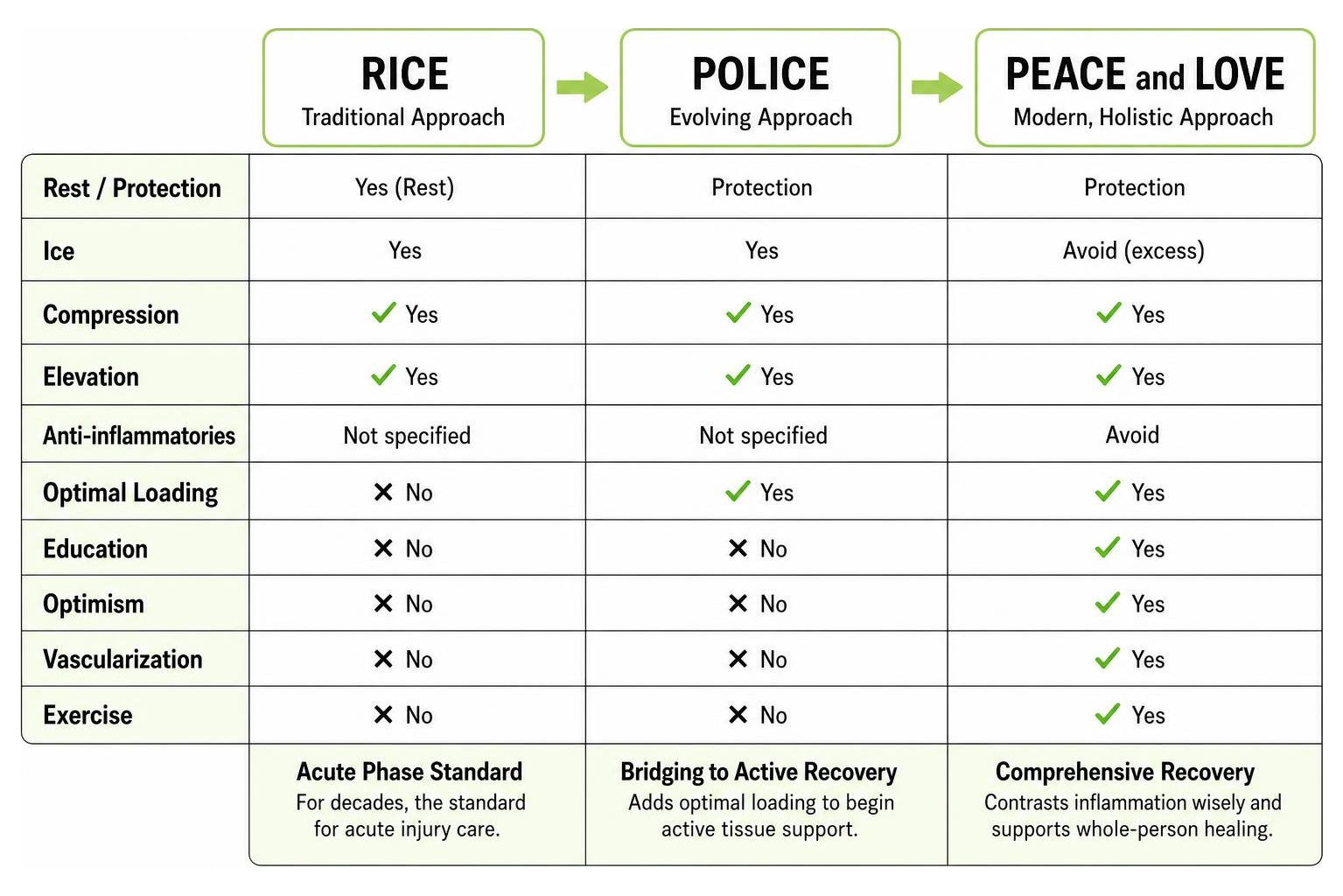
Subacute Rehabilitation: Applying LOVE to Tissue Repair
Once the initial acute phase subsides, typically after 3-7 days, the focus shifts to the LOVE protocol, which emphasizes active rehabilitation and psychological well-being for long-term functional restoration.
- L – Load: Gradually introduce progressive loading to the injured tissues. This means engaging in controlled, pain-free movements and exercises. Mechanotransduction, the process by which cells sense and respond to mechanical loads, is vital for stimulating collagen synthesis, strengthening tissues, and guiding proper tissue remodeling. Over-resting can lead to muscle atrophy and joint stiffness, while optimal loading promotes adaptation and resilience.
- O – Optimism: Maintain a positive and optimistic outlook. Psychological factors, as we will discuss further, significantly influence pain perception and recovery speed. Believing in your ability to recover and staying engaged in the process can have measurable physiological benefits.
- V – Vascularization: Engage in pain-free cardiovascular activities to improve blood flow to the injured area. Increased vascularization delivers essential nutrients and oxygen, and helps remove metabolic waste products, accelerating tissue repair. Low-impact activities like cycling, swimming, or walking can be beneficial.
- E – Exercise: Implement a structured exercise program tailored to your injury. This includes exercises to restore strength, range of motion, balance, and proprioception. Active exercise is crucial for functional restoration and preventing re-injury, progressing from gentle movements to more challenging, sport-specific activities.
Biological Foundations of Injury Recovery and Pain Management
The journey from injury to full recovery is a complex biological symphony involving cellular repair pathways and intricate inflammatory cascades. Our bodies inherently possess remarkable healing capabilities, but these can be influenced by various factors, including systemic inflammation and the specific cellular responses mounted.

At the heart of soft tissue healing, such as in tendons and ligaments, lies the challenge of poor vascularity. Unlike highly vascularized tissues, these structures often heal via fibrotic scar tissue rather than true regeneration, leading to mechanically weaker repairs and a higher risk of re-injury. The initial inflammatory phase, characterized by the influx of immune cells, is critical. Macrophages, for instance, play a dual role, initially acting as “first responders” (M1 phenotype) to clear debris, and then transitioning to “builders” (M2 phenotype) to promote tissue repair and regeneration. Understanding and modulating this macrophage polarization (M1 to M2 shift) is a key area of research in optimizing healing.
Inflammatory Biomarkers and Pain Chronification Pathways in Injury Recovery and Pain Management
Inflammatory biomarkers serve as objective indicators of the body’s response to injury and can offer insights into pain severity and the risk of developing chronic pain. C-reactive protein (CRP) and Interleukin-6 (IL-6) are two prominent examples. Elevated levels of these biomarkers indicate systemic inflammation and have been linked to higher pain levels and poorer treatment outcomes following musculoskeletal injury. For instance, sustained high levels of CRP and IL-6 can contribute to neuroinflammation, affecting the central nervous system’s processing of pain.
This persistent inflammatory state can drive processes like central sensitization, where the nervous system becomes hypersensitive to pain signals. It can also lead to dorsal horn remodeling in the spinal cord, essentially rewiring pain pathways to amplify nociceptive signaling. Monitoring these biomarkers can provide prognostic indicators, helping clinicians identify individuals at higher risk for pain chronification and tailor interventions accordingly. Other biomarkers like IL-10 and TNF-alpha are also being studied for their roles in modulating pain and inflammation.
Regenerative Biologics and Tissue Engineering
The field of regenerative medicine offers exciting prospects for improving soft tissue healing, particularly in areas with limited intrinsic repair capacity. These therapies aim to enhance the body’s natural healing processes, reduce scar tissue formation, and promote true tissue regeneration.
One prominent approach, often termed the “Regenerative Trifecta,” combines umbilical cord mesenchymal stem cells (UC-MSCs), platelet-rich plasma (PRP), and exosomes. This multimodal strategy targets three key biological deficits in soft tissue healing:
- Insufficient paracrine signaling: UC-MSCs are potent immunomodulatory agents that provide crucial paracrine signaling, influencing local cells and promoting an anti-inflammatory, pro-regenerative environment. They encourage the beneficial M1 to M2 macrophage transition.
- Inadequate growth-factor delivery: PRP, derived from the patient’s own blood, delivers a concentrated dose of growth factors (e.g., PDGF, TGF-β, VEGF, IGF-1) essential for cell proliferation, migration, and tissue repair. Leukocyte-poor PRP, in particular, may be preferred for conditions like osteoarthritis due to its reduced pro-inflammatory potential compared to leukocyte-rich formulations.
- Pro-fibrotic microenvironment: Exosomes, tiny vesicles released by cells, carry a cargo of microRNAs (miRNAs) that can modulate gene expression in recipient cells. MSC-derived exosomes, for example, can deliver anti-fibrotic miRNA cargo, helping to mitigate excessive scar tissue formation and promote a more regenerative healing pathway.
Other regenerative therapies include prolotherapy, which involves injecting hypertonic dextrose solution to create a localized, controlled inflammatory response that stimulates fibroblast activity and collagen deposition, strengthening connective tissues. Viscosupplementation, primarily using hyaluronic acid (HA), is FDA-cleared for knee osteoarthritis and works by improving the lubricating and shock-absorbing properties of joint fluid, modifying the joint microenvironment, and reducing pain. While these therapies show promise, it’s crucial to consult with a specialist to determine suitability and understand the evidence base for each.
Psychosocial Interventions in Musculoskeletal Rehabilitation
Pain is not merely a physical sensation; it is a complex, subjective experience profoundly influenced by psychological and social factors. The biopsychosocial model of pain acknowledges this intricate interplay, recognizing that biological injury, psychological state, and social context all contribute to an individual’s pain experience and recovery trajectory.
Psychological factors such as pain catastrophizing (an exaggerated negative orientation toward pain), kinesiophobia (fear of movement due to pain), anxiety, and depression can significantly amplify pain intensity, increase disability, and predict the transition from acute to chronic pain after an injury. These factors can lead to fear-avoidance behaviors, where individuals restrict activity to avoid perceived pain, inadvertently leading to deconditioning, increased stiffness, and further pain. Affective distress can also modulate central sensitization, making the nervous system more sensitive to pain signals. Integrating psychological interventions into musculoskeletal rehabilitation is therefore not just an adjunct but a fundamental component of effective treatment, focusing on functional restoration alongside physical healing.
Evidence-Based Psychological Modalities in Injury Recovery and Pain Management
Several psychological treatments have demonstrated efficacy in managing pain and improving functional outcomes following musculoskeletal injury, often complementing traditional physical therapies.
- Cognitive Behavioral Therapy (CBT): CBT is a highly effective intervention that helps individuals identify and change maladaptive thoughts, beliefs, and behaviors related to pain. It teaches coping strategies, relaxation techniques, and activity pacing, helping to reduce pain catastrophizing, anxiety, and depression. By reframing negative thought patterns, CBT empowers patients to manage their pain more effectively and engage in activities they previously avoided.
- Pain Neuroscience Education (PNE): PNE involves educating patients about the biological and physiological processes of pain, explaining that pain is not always indicative of tissue damage but can be influenced by the brain’s interpretation of signals. Understanding the neurobiology of pain helps demystify the experience, reduce fear-avoidance behaviors (kinesiophobia), and empower patients to engage in active rehabilitation.
- Mindfulness-Based Stress Reduction (MBSR): MBSR teaches mindfulness techniques, such as meditation and body scans, to help individuals develop a non-judgmental awareness of their present moment experience, including pain. This can reduce the emotional reactivity to pain, improve coping skills, and lower overall stress levels, contributing to neuroplasticity and a more adaptive pain response.
- Biofeedback: This technique uses electronic sensors to monitor physiological responses (e.g., muscle tension, heart rate, skin temperature) and provides real-time feedback to the patient. Individuals learn to consciously control these responses, which can help reduce muscle tension, manage stress, and alleviate pain.
Meta-analyses consistently show that psychological interventions like CBT, PNE, and MBSR lead to short-term reductions in pain intensity, functional impairment, and psychological distress. While long-term benefits are still being rigorously studied, the immediate improvements in coping and function are significant. These therapies, when combined with physical rehabilitation, often yield superior outcomes compared to physical therapy alone, by addressing the holistic pain experience.
Overcoming Implementation Barriers and Digital Health Integration
Despite the clear evidence supporting psychological interventions, several barriers hinder their widespread implementation in routine musculoskeletal care. These include a lack of adequate training for physiotherapists in psychologically informed approaches, time constraints in clinical settings, and insufficient referral pathways to mental health specialists. Furthermore, the stigma associated with mental health can deter patients from seeking psychological support.
However, technology-enhanced delivery models are emerging as promising solutions to improve access and effectiveness.
- Telehealth Delivery: Virtual platforms allow patients to access CBT, PNE, and MBSR sessions from the comfort of their homes, overcoming geographical barriers and reducing the need for travel. This has significantly expanded reach, particularly in underserved areas.
- Mobile Health (mHealth) Apps: Numerous mobile applications offer guided mindfulness exercises, pain tracking, educational content on pain neuroscience, and CBT-based modules. These apps can provide convenient, on-demand support, reinforce therapeutic concepts, and facilitate remote monitoring of progress.
- Hybrid Care Models: Combining in-person physical therapy with virtual psychological interventions or digital tools allows for a comprehensive, integrated approach that maximizes patient engagement and adherence.
- Clinical Training: Increased emphasis on biopsychosocial pain management in physiotherapy and medical curricula is crucial to equip healthcare professionals with the skills to screen for psychological risk factors and deliver basic psychologically informed care.
By leveraging these technological advancements and addressing training gaps, we can make psychologically informed pain management more accessible and effective for individuals recovering from musculoskeletal injuries.
Multimodal Clinical Strategies: Integrating Physical and Interventional Therapies
Effective injury recovery and pain management necessitate a multimodal approach that integrates various therapeutic strategies. Physical therapy, with its focus on neuromuscular re-education and therapeutic exercise, forms the cornerstone of rehabilitation. However, its efficacy is often enhanced when combined with other non-pharmacological and, when necessary, interventional therapies. The goal is to create a comprehensive, patient-centered plan that addresses all facets of pain and dysfunction.
Thermal, Electrical, and Mechanical Modalities
Beyond exercise, several physical modalities play a crucial role in managing pain and inflammation, supporting tissue healing, and improving function.
- Transcutaneous Electrical Nerve Stimulation (TENS): TENS units deliver mild electrical pulses through electrodes placed on the skin. These pulses can either block pain signals from reaching the brain (gate control theory) or stimulate the release of endorphins, the body’s natural painkillers. TENS is a non-invasive, drug-free option often used for acute and chronic musculoskeletal pain.
- Therapeutic Ultrasound: Ultrasound therapy uses high-frequency sound waves to penetrate soft tissues. Its effects can be thermal (heating tissues to increase blood flow and extensibility) or non-thermal (promoting cellular repair and reducing inflammation through mechanical effects). It’s used for conditions like tendonitis, sprains, and muscle spasms.
- Targeted Thermotherapy (Heat and Cold): Heat therapy, applied through warm packs, moist heat, or infrared lamps, increases blood flow, relaxes muscles, and reduces stiffness, making it beneficial for subacute or chronic pain. Cold therapy (cryotherapy), using ice packs or cold immersion, causes vasoconstriction, reduces swelling, numbs the area, and decreases muscle spasms, making it ideal for acute injuries (though used judiciously as per PEACE protocol). Contrast therapy, alternating heat and cold, aims to create a “pumping” action to reduce swelling and improve circulation.
- Joint Traction: Mechanical traction, particularly for the cervical and lumbar spine, involves gently pulling on a joint to create space, decompress nerves, and reduce pressure on discs. It can be effective for certain types of neck and back pain.
Many of these modalities require specialized equipment, and finding insurance-covered medical supplies can significantly ease the financial burden for patients requiring ongoing use at home or in clinics.
Pharmacological versus Non-Pharmacological Long-Term Outcomes
When considering long-term pain relief, the comparison between pharmacological and non-pharmacological options is critical. While pharmacological agents like NSAIDs, muscle relaxants, and in some cases, opioids, can provide immediate pain relief, their long-term use is often associated with significant risks and side effects. NSAIDs can cause gastrointestinal issues, cardiovascular problems, and kidney damage. Opioids carry a high risk of dependence, addiction, and overdose, and their long-term efficacy for chronic non-cancer pain is often limited.
Non-pharmacological treatments, including neuromuscular exercises, physical therapy, and psychological therapies, generally have favorable long-term efficacy profiles with fewer adverse effects. They focus on addressing the root causes of pain and dysfunction, improving coping mechanisms, and promoting self-management.
- Neuromuscular Exercises: These exercises improve muscle strength, coordination, balance, and proprioception, directly addressing biomechanical deficits that contribute to pain. For instance, specific exercises can be as effective as pharmaceuticals in the short term for pain reduction.
- Psychological Therapies: As discussed, CBT, PNE, and MBSR equip individuals with tools to manage pain, reduce distress, and improve functional engagement without medication.
The current best practice advocates for a multimodal analgesia approach, combining judicious, short-term pharmacological interventions with robust, long-term non-pharmacological strategies. This approach emphasizes opioid sparing, NSAID stewardship, and prioritizing therapies that empower patients with self-management skills and improve overall quality of life.
Practical Self-Care, Triage Guidelines, and Clinical Red Flags
Empowering individuals with practical self-care strategies is a cornerstone of effective injury recovery. While professional guidance is indispensable, many aspects of recovery can be managed at home through consistent effort and mindful monitoring.
Home Recovery Blueprints and Pain Monitoring
A structured home recovery plan involves several key components:
- Pain Monitoring: Utilize a simple 0-10 visual analog scale (VAS) to track your pain levels throughout the day and in response to activities. This helps you understand your pain patterns and make informed decisions about activity pacing. A general guideline: 0-3 (mild discomfort) – continue activity; 4-6 (moderate) – reduce intensity; 7-10 (severe) – stop and seek advice if persistent.
- Load Management: Gradually increase activity levels, adhering to the “LOVE” protocol. Avoid the temptation to do too much too soon. A common rule of thumb for exercise progression is to increase load by no more than 10% per week to prevent re-injury.
- Protein Intake: Nutrition plays a critical role in tissue repair. Aim for 1.6-2.2 grams of protein per kilogram of body weight daily, distributed across 3-4 meals (approximately 25-40g per meal). This supports muscle and connective tissue healing.
- Progressive Exercise: Follow a prescribed exercise program from your physical therapist. This typically progresses from gentle range-of-motion exercises to strengthening, balance, and finally, sport-specific movements.
- Activity Pacing: Learn to pace your activities to avoid flare-ups. Break down tasks into smaller chunks, take regular breaks, and alternate between active and rest periods.
- Sleep Optimization: Prioritize 7-9 hours of quality sleep per night. Sleep is crucial for cellular repair, hormone regulation, and pain modulation. Maintain a consistent sleep schedule and limit caffeine after 2 PM.
- Hydration: Drink plenty of water. A general guideline is to consume ounces of water equal to half your body weight in pounds each day.
Clinical Red Flags and When to Seek Medical Attention
While self-management is important, knowing when to seek professional medical attention is paramount. Certain symptoms or signs, known as “red flags,” indicate a potentially serious condition that requires immediate medical evaluation.
- List of Clinical Red Flags:Neurovascular Compromise: Numbness, tingling, weakness, or loss of sensation in a limb, especially if accompanied by changes in skin color, temperature, or pulse.
- Gross Joint Instability: A feeling of the joint “giving way” or being unable to bear weight, suggesting significant ligamentous damage.
- Intractable Pain: Severe pain that does not respond to rest, over-the-counter pain relievers, or other self-care measures, or pain that worsens progressively.
- Infection Indicators: Redness, warmth, swelling, pus, fever, chills, or malaise around the injured area.
- Structural Deformity: Visible misalignment, abnormal angulation, or a palpable gap in a bone or joint.
- Loss of Bowel or Bladder Control: Especially with back pain, this can indicate a serious spinal cord issue (e.g., cauda equina syndrome).
- Sudden, Severe Headache with Stiff Neck: Could indicate a serious neurological event.
- Pain Worsening at Night or Unrelated to Movement: May suggest a non-musculoskeletal cause or a more serious underlying condition.
- Pain Persisting Beyond 1-2 Weeks of Self-Management: If your symptoms are not improving or are worsening after a reasonable period of home care.
Always err on the side of caution. If you experience any of these red flags or have concerns about your injury, consult a healthcare professional promptly.
Frequently Asked Questions about Injury Recovery and Pain Management
How does the PEACE and LOVE protocol improve recovery compared to traditional icing and NSAID use?
The PEACE and LOVE protocol represents a significant advancement over RICE by recognizing the nuanced role of inflammation in healing. Traditional icing and NSAIDs, while reducing pain, can suppress the initial pro-inflammatory signaling necessary for tissue remodeling and cellular regeneration. PEACE and LOVE, conversely, encourages a controlled inflammatory response and early, optimal loading. This active approach promotes macrophage recruitment to clear debris, stimulates cellular regeneration, and enhances active vascularization, leading to stronger, more resilient tissue repair and faster return to function. It shifts the focus from passive rest to active, guided recovery.
What role do inflammatory biomarkers play in assessing long-term injury outcomes?
Inflammatory biomarkers like C-reactive protein (CRP) and Interleukin-6 (IL-6) serve as crucial objective assessment tools in predicting long-term injury outcomes. Persistently elevated CRP levels and IL-6 concentrations post-injury can signal ongoing systemic inflammation, which is a known contributor to chronic pain development and delayed healing. By monitoring these biomarkers, clinicians can identify individuals at higher risk for pain chronification, allowing for earlier, more targeted therapy, including anti-inflammatory strategies or psychological interventions, to mitigate these risks and improve prognosis.
How do psychological therapies enhance physical rehabilitation after acute trauma?
Psychological therapies are integral to enhancing physical rehabilitation after acute trauma by addressing the cognitive and emotional dimensions of pain. They significantly contribute to fear reduction, particularly kinesiophobia (fear of movement), which often hinders active rehabilitation. By educating patients on the neurobiology of pain and teaching coping strategies (e.g., through CBT or MBSR), these therapies help to downregulate the central nervous system’s pain response, reducing central sensitization. This leads to improved treatment adherence, greater functional mobility, and ultimately, a more successful and sustained recovery, preventing the psychological factors from becoming barriers to physical progress.
Conclusion
The landscape of injury recovery and pain management has undergone a profound transformation, moving towards a multidisciplinary care model that integrates biological, psychological, and social factors. By September 2026, we understand that optimal healing demands more than just treating the physical wound; it requires a comprehensive approach that nurtures the body’s innate healing capacity, manages pain effectively, and empowers the individual.
Embracing evidence-based rehabilitation protocols like PEACE and LOVE, understanding the role of inflammatory biomarkers, leveraging advanced regenerative biologics, and integrating psychological interventions are all critical components. This holistic, patient-centered approach, characterized by active recovery paradigms and a focus on long-term functional outcomes, is the key to not just recovering from an injury, but returning stronger and more resilient than before.
More tips on dealing with injury recovery and pain management:
