Key Takeaways
- Compare the entire property, not only the home, view, or asking price.
- Usable acreage can matter more than the total acreage listed.
- Lake access, utilities, roads, inspections, and property rules should be verified early.
- Private wells, septic systems, flood exposure, and insurance can affect long-term costs.
- A written scorecard helps buyers compare properties with less emotion and more clarity.
In and around Lake Kiowa, Texas, two homes with similar prices and square footage can create very different ownership experiences. A lakefront home may involve shoreline access and dock considerations, while a ranch or acreage property may require attention to fencing, drainage, wells, septic systems, private roads, and land maintenance.
For buyers who want local perspective, Lake Kiowa real estate experts Lake & Country Realty serve North Texas and southern Oklahoma with a focus on lake, farm, ranch, equine, land, residential, and commercial properties. Lake & Country Realty is particularly familiar with the distinct questions that arise in Lake Kiowa, Gainesville, Whitesboro, Pilot Point, and nearby communities, where the house is only one part of the property decision.
Table Of Contents
- Why Property Type Matters
- Start With Your Intended Lifestyle
- Compare Land And Usable Space
- Review Water Access And Shoreline Details
- Check Utilities, Wells, And Septic Systems
- Study Ownership Costs
- Verify Rules And Property Rights
- Build A Property Scorecard
- Final Due Diligence Checklist
Why Property Type Matters
Listing photos can make a wooded tract, a waterfront home, and a small ranch appear equally turnkey. In practice, each may require a different level of maintenance, specialized inspections, insurance review, and planning. The strongest comparison begins by looking past finishes and focusing on access, systems, restrictions, and recurring responsibilities.
Start With Your Intended Lifestyle
Before touring properties, decide what the place needs to do for you. A weekend retreat near the lake has different priorities than a full-time home with horses, a workshop, a garden, or room for equipment. Consider commute time to Gainesville or other North Texas destinations, proximity to services, and how much time you realistically want to spend on upkeep.
Questions To Ask First
- Will this be a primary residence, a second home, or a long-term investment?
- Do you need room for animals, trailers, boats, gardens, or a future shop?
- Is privacy more important than being close to community amenities?
- How much mowing, tree work, fence repair, and seasonal maintenance fits your schedule?
Compare Land And Usable Space
Acreage alone does not describe how functional a property will be. Slopes, drainage patterns, heavily wooded areas, flood-prone ground, easements, setbacks, and soil conditions can limit where you build, graze animals, park equipment, or garden. Five-acre parcels with dependable access may be more useful than ten acres of steep or poorly drained land.
Walk the property when possible and look for gates, fencing, barns, sheds, culverts, creek crossings, and turnaround space for trailers or emergency vehicles. Ask whether any shared driveways or private roads have written maintenance agreements. A current survey and recorded easement review can clarify boundaries and access before closing.
Review Water Access And Shoreline Details
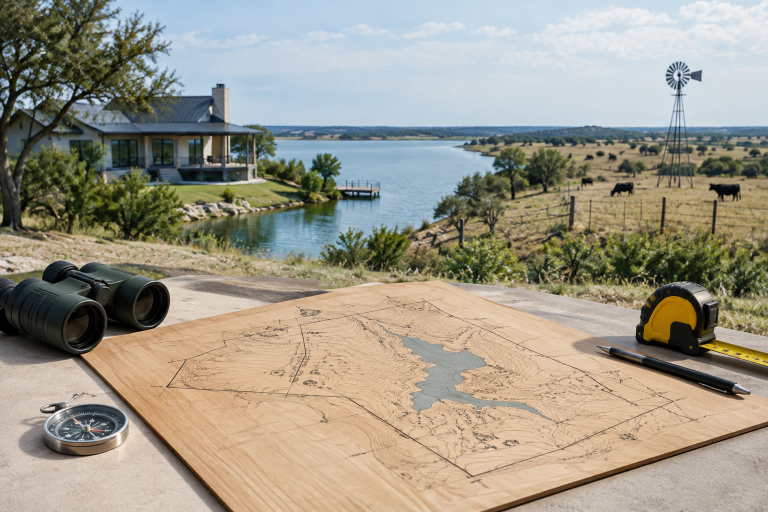
“Waterfront,” “water view,” and “water access” do not mean the same thing. For Lake Kiowa properties, confirm whether the shoreline is private or shared, whether a dock or boat slip is included, and whether association rules or permits affect planned improvements. Ask about shoreline maintenance, water-level changes, and the exact route from the home to the water.
Flood exposure deserves a separate review. Buyers can use the FEMA Flood Map Service Center to locate official flood hazard maps, then discuss property-specific insurance questions with an insurance professional before finalizing an offer.
Check Utilities, Wells, And Septic Systems
Some rural and lake-area homes rely on systems that city buyers may not encounter often. Confirm whether the property uses public water, a private well, public sewer, or a private septic system. Also ask about electric service, propane, backup power, internet availability, mobile coverage, and any shared utility agreements.
When septic service is involved, request available permits, design records, pumping history, and inspection documentation. The EPA’s septic system guidance explains that local permitting authorities may hold records and that system design can depend on factors such as lot size, slope, soil conditions, and occupancy.
Study Ownership Costs
A lower purchase price does not automatically mean a lower cost of ownership. Build a realistic annual estimate that includes property taxes, association fees, homeowners insurance, possible flood coverage, utilities, road upkeep, mowing, brush control, tree work, fence repairs, dock maintenance, and repairs to wells or septic systems.
Use three categories in your notes: expected costs, possible costs, and emergency costs. For example, routine pasture mowing belongs in the expected costs category, while replacing a well pump or repairing a washed-out driveway belongs in the emergency category. This simple exercise can reveal whether a property remains comfortable within your overall budget.
Verify Rules And Property Rights
Never assume a property can be used for every purpose you have in mind. County and local rules, deed restrictions, association requirements, and recorded easements may affect animals, rental activity, outbuildings, events, home businesses, additional residences, docks, or future land division.
Documents Worth Reviewing
- Zoning information and permitted uses.
- Deed restrictions and association rules.
- Survey, legal description, and recorded easements.
- Permits for wells, septic systems, docks, barns, and additions.
- Road agreements, access rights, and repair responsibilities.
A real estate professional can help identify the right questions, but legal, tax, engineering, environmental, and insurance matters should be reviewed with qualified professionals in those fields.
Build A Property Scorecard
After each tour, rate the property from one to five in these categories: lifestyle fit, usable land, location, utilities and systems, restrictions, ownership costs, and resale appeal. Add a few notes beneath every score. The purpose is not to replace inspections or due diligence. It is to keep a beautiful view or a newly renovated kitchen from overshadowing practical concerns.
Final Due Diligence Checklist
- Confirm boundaries, easements, and legal access.
- Review zoning, deed restrictions, and association requirements.
- Order inspections suited to the home and land features.
- Test the well and inspect the septic system when applicable.
- Verify shoreline, dock, road, and water-access rights.
- Request insurance quotes and review flood information early.
- Gather maintenance records, permits, and service documentation.
- Revisit the property after rain or during another season if practical.
Conclusion
Choosing a property in Lake Kiowa and the surrounding North Texas area means looking beyond the home’s appearance to understand the land, access, utilities, restrictions, and ongoing responsibilities. Verify usable acreage, water access, well and septic conditions, flood exposure, insurance, and maintenance costs before making an offer. A consistent scorecard, property-specific inspections, and careful document review can help you compare options without letting an attractive view or large lot overshadow important details. With thorough due diligence and local guidance from Lake & Country Realty, you can find a property that fits your lifestyle, budget, and long-term plans.
More tips on real estate investments:
- Interesting Facts About Property Investing That You Didn’t Know
- How to Make Money in the Real Estate Market
- Everything You Need To Know Before Investing In Real Estate
