If your home constantly turns into a thermostat battleground, you’re not alone. “Mom Cold” is real, and your HVAC system might be caught in the middle. 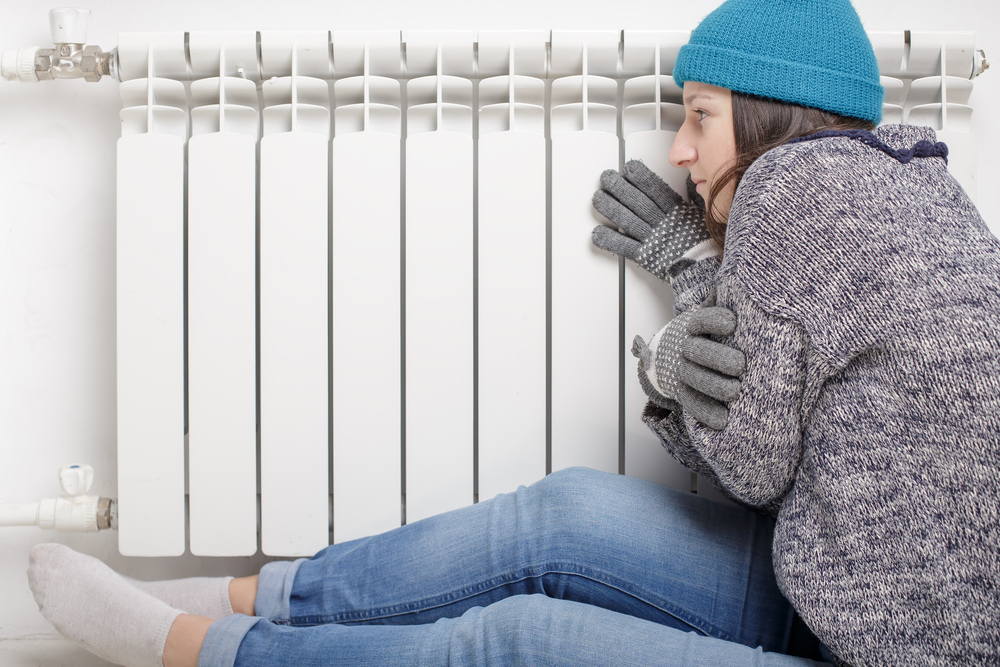 Before you touch that dial again, here’s why moms feel the chill first and how your home’s heating and cooling setup can help everyone stay comfortable.
“Mom Cold” and Why It’s More Than Women Feeling Cold
“Mom Cold” isn’t a medical diagnosis, it’s a cultural phenomenon. It’s that moment when Mom’s wrapped in a blanket while everyone else is in T-shirts, insisting the house feels like a meat locker. Families joke about it because it’s so universal. Nearly every household has that one person who’s perpetually chilly, and in many cases, it’s Mom.
But underneath the jokes, there’s real science: women feeling cold more easily has biological roots. Women’s bodies are wired to conserve heat differently than men’s, making them feel cold sooner. So when Mom turns up the thermostat, it’s not drama, it’s biology doing its thing.
“Mom Cold” isn’t about being dramatic, it’s about being done. It’s the chill that hits right after Mom finishes running the house, folding three loads of laundry, and reminding everyone else to grab a jacket. The thermostat becomes a family scoreboard, and Mom’s comfort is always last on the list.
It’s not that moms can’t handle a draft, it’s that they’ve learned to notice every little discomfort because they’re managing everyone else’s. “Mom Cold” is basically the physical form of mental overload: your body saying, “I’ve done enough, someone else can warm up the house.” That sense of being cold all the time is often your body’s way of signaling it’s low on energy reserves.
What Temp Is Too Cold For Mums?
While everyone’s comfort zone is different, most women start to feel “too cold” once room temps dip below 70°F (21°C). That’s because women generally have a slightly lower resting metabolic rate, so they generate less body heat. Add to that hormonal shifts, less muscle mass (which burns heat efficiently), and colder hands and feet from naturally lower peripheral blood flow, and you’ve got the perfect storm for a “Mom Cold.” It’s not that moms are fragile; they’re just finely tuned thermometers with excellent self-preservation instincts.
The “too cold” threshold isn’t really a number, it’s a vibe. It’s the moment Mom wraps herself in a blanket burrito while the kids are walking around barefoot, eating popsicles. She feels it first because she’s been on all day. Stress, multitasking, and low downtime drop body temperature slightly, and the body just stops wasting energy on warmth. That’s how cold sensitivity starts to show up, when the body’s too overworked to self-regulate.
So no, she’s not being picky, her nervous system’s basically saying, “If you’re not going to give me a break, I’m going into power-saving mode.” And if she’s always cold, it’s her biology waving a little white flag. But sometimes it’s not the case, and the only thing you need is heating maintenance to make sure your system’s keeping up with the weather.
Why Do Women Feel Colder?
Blame physiology, not personal preference.
Women tend to have more body fat (which insulates core organs) but less muscle, meaning less heat generation. Their blood vessels constrict more quickly in cooler air, diverting warmth to vital organs and leaving hands and feet freezing. Estrogen and progesterone fluctuations throughout the menstrual cycle also affect how blood vessels respond to cold, making women more temperature-sensitive. So when she’s shivering under the same blanket, it’s not “in her head”, it’s biology at work. This cold sensitivity can fluctuate day to day, depending on stress and hormone levels.
But comfort isn’t just physical, it’s relational. Men tend to run warmer and have fewer expectations placed on them to keep everyone else comfortable. Women often notice details, airflow, light, smells, that men overlook, and that awareness translates into sensitivity. So when she’s shivering under the same blanket, it’s not just biology, it’s also that she’s aware of the chill while he’s tuned out everything except the game. “Feeling cold” can be the body’s way of saying, “Hey, I’m overstimulated, and nobody’s listening.” That’s why so many women feeling cold report also being mentally and physically drained.
Do Men Feel Cold More Than Women?
For most healthy adults, men do tolerate cold better, but that’s not universal. Some have lower body fat or faster metabolisms that make them run hot, but plenty still feel chilly (they just hide it better). The real difference lies in perception and physiology: women’s skin temperature drops faster, especially at the extremities, so while both may be “cold,” Mom feels it sooner and more intensely.
Men feel cold too, they just handle it differently. Most won’t say, “I’m freezing.” They’ll say, “It’s fine,” while quietly turning up the thermostat when no one’s looking. The myth persists because men’s skin is warmer to the touch and they produce more heat, but perception is everything, women’s nerves fire faster in response to temperature changes, so they notice discomfort first. That sharper cold sensitivity makes them react faster to even small temperature drops.
So no one’s tougher, they’re just playing different sensory games.
How Hormones and Circulation Shape Cold Sensitivity
Estrogen thickens blood, reducing flow to skin surfaces, while progesterone can raise core temperature. Together, they cause fluctuating comfort levels. More muscle equals more heat production, and since men generally have 30-40% more, they run warmer. Women’s bodies also prioritize warmth for internal organs over extremities, which is why their hands and feet often feel like ice cubes even in mild weather. When your body’s cold all the time, it’s often because circulation is prioritizing survival over comfort.
It’s not about willpower, it’s chemistry, anatomy, and evolution teaming up to make “Mom Cold” totally legitimate. Female hormones make the body a master regulator, constantly adjusting blood flow, heat production, and even emotional responses. That adaptability means women feel temperature swings more acutely, the same hormones that help them grow a baby or recover from stress also make them more responsive to subtle environment shifts.
Basically, women’s bodies are tuned like a high-end thermostat, they just pick up changes faster than everyone else. That’s why women feeling cold isn’t a sign of weakness, it’s proof their bodies are hyper-efficient sensors.
Thermostat Wars: Women Feeling Cold vs. Everyone Else
The “thermostat war” is a classic power struggle between comfort zones. One person’s cozy is another’s sauna. When you combine different metabolisms, hormones, and preferences under one roof, peace treaties get drafted at 72°F.
The conflict isn’t really about heat, it’s about control. Who gets to define comfort? Who decides what “normal” feels like? Couples fight because temperature is tied to identity: one person feels guilty for being cold, the other feels attacked for being warm. It’s not just air, it’s ego.
Fix it by reframing comfort as shared, not contested. Switch from thermostat battles to microclimate zones, a heated throw or cooling fan can solve what hours of thermostat tweaking can’t. Agree on a neutral base temperature (around 70°F works for most households) and personalize from there. Communicate, don’t compete; acknowledging that you physically experience temperature differently can turn arguments into teamwork.
Make it playful, not personal (“We’re now accepting thermostat peace treaties”), or agree that whoever’s cold gets priority, because science and kindness say so. After all, if someone’s always cold, they’re not being dramatic, their cold sensitivity just runs deeper.
How to Stay Cozy When You’re Always Cold
Small tweaks can go a long way. For the always-cold partner: layered clothing, fuzzy socks, space heaters, or heated blankets. For the always-hot partner: cooling bedding, fans, or breathable cotton layers.For shared spaces: use smart thermostats with zoning, rugs, and curtains to reduce drafts. And if your system still can’t keep up, it might be time for a quick furnace repair or tune-up to restore even heating. And if all else fails, remember the golden rule, whoever’s cold wins. You can always take layers off, but you can’t generate body heat on command.
Forget arguing over degrees, start creating temperature zones. Warm corners with heated throws, candles, and soft lighting make warmth sensory, while cool escapes like lightweight bedding or a mini fan balance things out. Rugs, curtains, and draft blockers do more than thermostats for evening out temps.
Most importantly, build a “comfort culture.” If someone’s cold, don’t mock them, hand them the blanket. Small gestures heat a home better than any HVAC system. Especially when women feeling cold is more than preference, it’s the body asking for balance.
When Being Cold All the Time Means Something More
If someone’s feeling cold constantly, even in warm environments, it might be time to check in with a doctor. Persistent chilliness can signal thyroid disorders (like hypothyroidism), anemia or low iron, poor circulation, cardiovascular issues, malnutrition, or hormonal changes such as menopause or adrenal imbalance. If the “Mom Cold” comes with fatigue, dizziness, or numb fingers and toes, it’s more than a thermostat issue, it’s worth a check-up.
But here’s the twist: sometimes it’s not about illness, it’s about burnout. When you’re overextended and underslept, your body literally powers down non-essentials like warmth. So if Mom’s cold all the time, maybe she doesn’t need more heat, she needs rest, hydration, and someone else to handle dinner for once.
Related Posts:
