Moss agate is one of those stones people fall for before they know its name. The green, tree-like patterns suspended inside a translucent stone look like a tiny landscape frozen in glass. But what is it, actually, and why has it become such a favorite for rings and jewelry? Here is the full picture.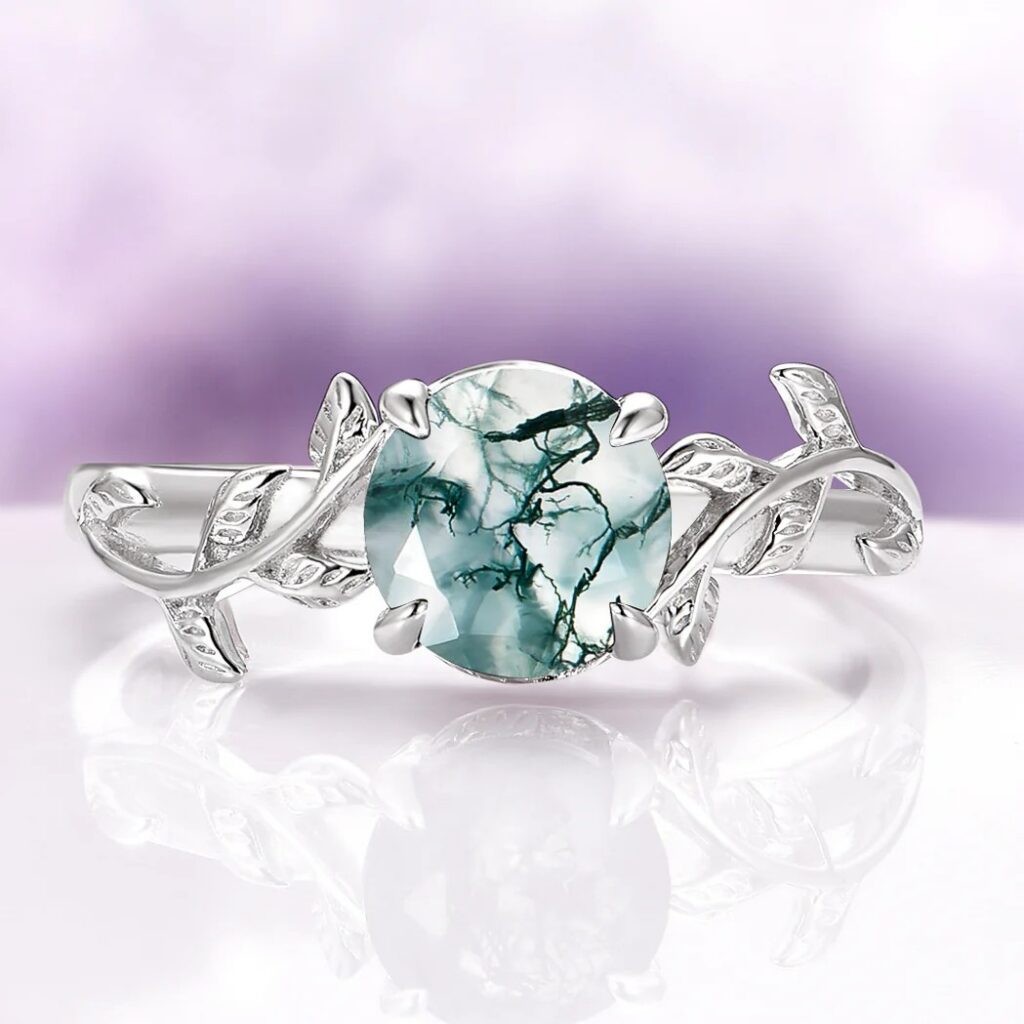
It is not actually a moss
Despite the name, there is no plant inside the stone. Moss agate is a form of chalcedony, a type of quartz, and the green moss is made of mineral inclusions – usually iron or manganese – that grew into branching, fern-like shapes as the stone formed. The effect looks organic, which is exactly why it reads as a piece of nature captured in stone.
Technically, moss agate is not even a true agate, since it lacks the concentric banding agates are known for. The name stuck because of how it looks rather than how it is classified. What matters to most people is the appearance: no two stones share the same pattern.
The green patterns inside moss agate are mineral inclusions – a tiny landscape in stone.
Where it comes from
Moss agate is found in several parts of the world, including India, the United States, and parts of Central Europe. Each source tends to produce slightly different coloring and density of inclusions, which is part of why the stone varies so much from piece to piece. Some stones are pale and sparse, others dense and forest-green.
Why it works so well in jewelry
Two reasons. First, it is durable enough for everyday wear, sitting comfortably in the range that suits rings worn daily. Second, and more importantly, its natural, earthy look pairs beautifully with nature-inspired designs – leaf settings, organic textures, and botanical motifs. That combination has made it a signature stone for anyone who wants jewelry that feels grown rather than manufactured. Aquamarise is one of the makers that leans into that pairing.
What to look for
Because every moss agate is unique, choosing one is personal. Some people prefer dense, dramatic greenery; others like a clearer stone with delicate wisps. Neither is better – it comes down to which little landscape speaks to you. A browse through a range of moss agate jewelry is the easiest way to see how much the stone can vary from piece to piece.
More than one shade of green
While the classic moss agate is green on a clear or milky background, the stone is more varied than people expect. Some pieces lean blue-green, others carry hints of red or brown from iron-rich inclusions, and a few are almost black-and-white. This range is part of what keeps the stone interesting – two moss agates can look like they came from entirely different worlds. When you are choosing, it is worth deciding not just how dense you want the pattern, but which overall tone appeals to you, since that color cast changes the character of a piece as much as the pattern itself does.
The takeaway
Moss agate is a form of quartz whose green mineral inclusions create a one-of-a-kind, nature-in-stone look. Durable, distinctive, and impossible to duplicate, it has earned its place as a favorite for rings and jewelry that celebrate the natural world – and half the pleasure is that no two stones are ever the same.
More Jewelry Tips:
