Table Of Contents
- Why Comfort And Efficiency Matter In Mansfield, Texas
- How Metal Buildings In Mansfield Gain And Lose Heat
- Start With The Building Envelope
- Compare Insulation Options
- Control Air Leaks And Thermal Bridges
- Prevent Condensation Before It Starts
- Improve Doors, Windows, And Openings
- Match HVAC To The Space
- Use Lighting And Daylight Wisely
- Plan A Practical Upgrade
- Common Questions
- Conclusion
Metal buildings are a familiar part of the Mansfield, Texas, landscape, from contractor shops and equipment storage to warehouses, farm structures, and growing commercial spaces. In a climate with strong summer sun, humid stretches, sudden storms, and occasional winter cold fronts, metal building insulation should be considered part of a complete strategy for comfort, moisture management, and dependable operating costs.
A steel building can be durable and practical while still feeling difficult to use if indoor conditions swing sharply from morning to afternoon. The most effective improvements address the roof, walls, seams, doors, ventilation, lighting, and mechanical equipment as interconnected parts of a single building system.
That whole-building approach matters for people working inside, temperature-sensitive inventory, tools, machinery, and materials that can be affected by moisture. It also helps owners avoid spending heavily on one upgrade while leaving obvious gaps or poorly sealed openings unaddressed.
For projects being planned from the ground up, new construction insulation creates an opportunity to coordinate insulation depth, vapor control, roof details, and HVAC needs before the building is enclosed.
Why Comfort And Efficiency Matter In Mansfield, Texas
Metal panels readily respond to outdoor conditions. Direct sunshine can add substantial heat to the roof and exterior walls, while cold weather can make unprotected surfaces feel chilly. In a Mansfield workshop, the center of the floor may feel acceptable, while the area near a west-facing wall, an overhead door, or the roof perimeter may feel noticeably warmer or colder.
Insulation is important, but comfort is not determined by R-value alone. Gaps, compressed insulation, exposed framing, unsealed penetrations, and oversized or poorly controlled HVAC equipment can all limit the result. A successful plan treats the enclosure and mechanical system as one coordinated system.
How Metal Buildings In Mansfield Gain And Lose Heat
Heat moves through buildings in three basic ways. Conduction transfers heat through materials, convection moves heat through air, and radiant heat travels from a hot surface to cooler surroundings. Steel conducts heat more readily than many common building materials, so framing and panel details deserve close attention.
During a sunny North Texas afternoon in Mansfield, roof and wall panels absorb solar energy. After sunset or when a cold front arrives, heat can escape the conditioned space through weak points in the assembly. The roof, walls, seams, and openings determine how quickly those changes affect the interior.
Start With The Building Envelope
The building envelope is the boundary between conditioned indoor air and outdoor weather. A dependable envelope manages heat flow, air movement, and moisture together. Before choosing products, inspect the entire structure rather than focusing only on the most uncomfortable room.
Areas To Review
- Roof panels, purlins, insulation support systems, and penetrations.
- Wall panels, girts, fasteners, and panel seams.
- Wall-to-roof transitions, eaves, slab edges, and base connections.
- Windows, personnel doors, overhead doors, loading bays, and utility openings.
- Staining, wet insulation, corrosion, drafts, or repeated condensation.
Compare Insulation Options
Insulation should fit the building use, available cavity depth, moisture conditions, fire requirements, and budget. Fiberglass systems are commonly used in metal building roofs and walls. Rigid board insulation can provide continuous coverage in appropriate assemblies, while spray foam can combine insulation and air sealing when correctly specified and installed. Insulated metal panels and reflective products also have roles in certain designs.
Compare the full assembly, not just a labeled material value. Compression, gaps, joints, thermal bridges, vapor control, and installation quality all affect in-place performance. The National Insulation Association provides guidance on metal building energy codes that explains why assembly design and installation details matter.
Control Air Leaks And Thermal Bridges
An air leak is a gap that allows conditioned air and moisture to move through the enclosure. A thermal bridge is a relatively direct path for heat to travel through a less-resistant material, such as metal framing or a poorly detailed connection. Both can create hot spots, cold spots, drafts, and condensation risks.
Check panel seams, roof penetrations, fastener lines, door frames, window edges, utility penetrations, and transitions between different materials. Visual inspections can reveal obvious issues, while smoke testing, infrared scanning, or professional diagnostic testing can help locate harder-to-find problems.
Prevent Condensation Before It Starts
Condensation occurs when moist air comes into contact with a surface cold enough for water vapor to condense into liquid water. In metal buildings, repeated moisture can dampen insulation, stain finishes, contribute to corrosion, and create conditions that support mold growth on susceptible materials.
Steps To Reduce Moisture Problems
- Identify indoor moisture sources, including people, washdown activities, wet materials in storage, and process equipment.
- Seal gaps around seams, penetrations, and openings.
- Use a vapor-control approach appropriate for the assembly and local conditions.
- Keep gutters, drains, roof flashings, and exterior drainage in working order.
- Provide ventilation where the building use requires it.
Ventilation does not replace air sealing. Ventilation manages indoor air and moisture, while air sealing limits uncontrolled movement through the enclosure.
Improve Doors, Windows, And Openings
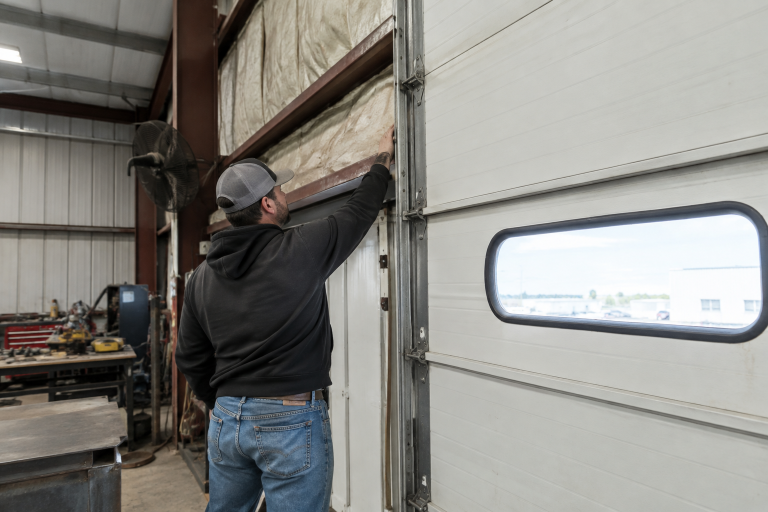
Large openings can undermine an otherwise efficient metal building. A conditioned shop can quickly lose comfort when an overhead door remains open on a hot afternoon or a cold, windy day. Replace worn seals, adjust doors to close squarely, inspect window perimeter seals, and consider insulated doors where stable indoor temperatures are important.
High-traffic loading areas may benefit from operational changes, vestibules, or air curtains when appropriate. The best option depends on traffic patterns, building use, and whether workers need to move equipment through the opening.
Match HVAC To The Space
Improving the enclosure can reduce heating and cooling demand, but HVAC equipment must still be sized and controlled for the actual space. Floor area alone is not enough. Ceiling height, solar exposure, door use, occupancy, internal equipment heat, air leakage, and humidity needs all influence the load.
Ask whether the entire building needs conditioning or whether only offices, work zones, or storage areas require it. Zoned controls can help avoid conditioning seldom-used areas at the same level as occupied workspaces.
Use Lighting And Daylight Wisely
Lighting affects visibility and adds heat inside the building. LED fixtures, occupancy sensors, and separate lighting zones can reduce unnecessary operation. Daylight from translucent panels or skylights may be useful, but it should be balanced with glare, solar heat gain, roof detailing, and maintenance needs.
Plan A Practical Upgrade
- Record problem areas, including drafts, hot spots, cold spots, damp areas, and recurring complaints.
- Inspect roof and wall connections, seams, doors, penetrations, and drainage details.
- Address urgent water intrusion, damaged materials, and safety concerns first.
- Prioritize practical repairs, such as fixing failed seals and visible gaps, before making major equipment changes.
- Review the complete insulation assembly and applicable local requirements.
- Track indoor temperature, humidity, energy use, and equipment runtime after the work is complete.
Because energy requirements vary by jurisdiction and code adoption cycle, project teams should verify current local requirements before finalizing an assembly. Recent energy code considerations for metal buildings also emphasize evaluating the performance of tested assemblies rather than relying on a single insulation number.
Common Questions
What Is The First Area To Check In An Uncomfortable Metal Building?
Start with the roof, major seams, doors, and visible gaps. These areas often reveal direct paths for heat gain, heat loss, air leakage, or moisture entry.
Is A Higher R-Value Always Better?
Not by itself. The assembly must also suit the available space, moisture strategy, climate, fire requirements, and installation details.
Can Insulation Stop Condensation?
It can help keep interior surfaces warmer, but condensation control also depends on air sealing, indoor humidity, ventilation, and properly designed vapor control.
Should The Roof Or Walls Be Upgraded First?
The answer depends on the building’s primary problem. Roof work may be especially valuable where solar heat is the main concern, while walls and openings may deserve priority in drafty, frequently accessed spaces.
Conclusion
Comfortable, efficient metal buildings in Mansfield, Texas, come from coordinated decisions, not a single product. By reviewing insulation, air sealing, moisture control, openings, lighting, and HVAC together, owners can prioritize upgrades that protect the structure and make the building more comfortable year-round.
Related Posts:
- The Benefits of A Metal Storage Building
- Discover the Future of Metal Construction at Metalcon
- 5 Reasons You Should Install a Metal Carport
