Key Takeaways
- Well-rounded training combines basketball fundamentals, movement skills, decision-making, and teamwork.
- Players improve when drills match their age, experience, and physical development.
- Confidence grows through preparation, useful feedback, and permission to learn from mistakes.
- Teamwork is best taught through communication and game-like situations.
- Rest, nutrition, hydration, and emotional well-being are part of athlete development.
Table Of Contents
- Introduction
- Why Girls Basketball Training Matters
- Core Skills Every Player Should Practice
- How Training Should Change With Age
- What A Balanced Practice Looks Like
- Building Confidence
- Teaching Teamwork Through Play
- Safety, Rest, And Healthy Habits
- What Parents Should Look For
- Common Mistakes To Avoid
- Helping Young Athletes Build Skills That Last
Great girls’ basketball training does more than help players make more shots. It teaches athletes how to move well, make decisions, communicate under pressure, and keep working when a drill or game does not go their way. A thoughtful girls basketball training approach provides players with a supportive environment to develop those skills over time.
For parents and coaches, the goal should be steady progress rather than instant results. Young athletes benefit most when practice is challenging, age-appropriate, safe, and enjoyable enough that they want to keep learning.
Why Girls Basketball Training Matters
Regular practice improves coordination, balance, body control, and comfort with the ball. It also teaches discipline, focus, resilience, and communication. Training should never be limited to shooting drills. A player who learns to see an open teammate, make a strong pass, and defend with effort may become more valuable to her team long before she becomes its top scorer. Positive coaching makes that learning process easier because players feel safer taking smart risks and correcting mistakes.
Core Skills Every Player Should Practice
Ball Handling
Players should dribble with both hands, keep their heads up, and learn to change pace and direction without losing control. Stationary drills are useful early on, but players also need to protect the ball while moving and while facing pressure from a defender.
Passing And Shooting
Chest passes, bounce passes, overhead passes, and passes made while moving all help players read the court. Shooting should begin with balance, foot placement, and short-range form work. As players improve, they can add game-speed shots, finishes with either hand, and shots taken after cuts, screens, or dribble moves.
Defense And Movement
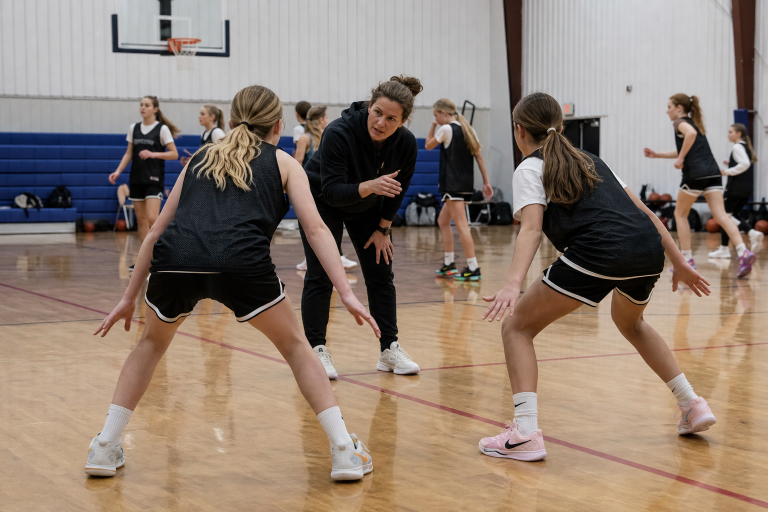
Defensive training should cover stance, lateral footwork, controlled closeouts, help defense, and rebounding position. Players need to learn how to move without crossing their feet, use their bodies legally, and locate both the ball and an opponent when a shot goes up.
How Training Should Change With Age
Beginning players need active, simple sessions that build coordination, ball familiarity, and basic understanding of the game. Short drills with frequent changes can keep them engaged. Middle-school players can take on more small-sided games, transition situations, cutting, spacing, and defensive-help concepts. High school players may benefit from film study, pressure drills, conditioning, and position-specific work, but they should still develop broad court skills rather than being placed in one role too early.
What A Balanced Practice Looks Like
- Warm-up: Start with light movement, mobility, and controlled changes of direction.
- Skill block: Teach one or two priorities, such as finishing, passing, or defensive slides.
- Decision-making: Add defenders, time limits, or multiple passing options.
- Small-sided games: Use two-on-two or three-on-three play for more touches and choices.
- Team concepts: Practice communication, screens, spacing, rebounding, and help defense.
- Cool-down: Finish with hydration, easy movement, and a quick review of the day.
Practice quality matters more than simply adding drills or extending the session. Players learn faster when they understand the purpose of an activity and have repeated chances to apply it in a game-like setting.
Building Confidence Through Preparation
Confidence is built through effort that players can see and feel. Coaches can reinforce progress by praising strong communication, defensive effort, smart passing, and improvement, not just points scored. Small goals are especially useful. A player might aim to complete five quality defensive slides, make three extra passes, or communicate on every possession during a short scrimmage. Clear feedback gives athletes an immediate next step, while treating mistakes as information keeps a missed shot or turnover from feeling like a personal failure.
Teaching Teamwork Through Play
Teamwork becomes real when players solve basketball problems together. Drills that require every player to touch the ball can encourage movement and inclusion. Coaches can rotate leadership roles and reward assists, box-outs, good screens, help defense, and players who call out screens or rotations. Youth basketball events organized by schools and community programs can also show players that sports involve shared responsibility, physical activity, and connection beyond a single team.
Safety, Rest, And Healthy Training Habits
Players should warm up before intense activity, drink water regularly, and report pain, dizziness, or unusual fatigue rather than trying to hide it. Rest days, regular meals, sleep, and sensible strength training all support development. The CDC’s physical activity guidance also reinforces the broad health value of staying active. Athlete wellness includes mental and emotional health, so adults should avoid creating year-round pressure to perform at maximum intensity.
What Parents Should Look For In A Program
- Clear goals: Players and families should understand what the program teaches.
- Age-appropriate coaching: Drills and expectations should fit the group.
- Qualified adults: Coaches should prioritize teaching, safety, and respectful communication.
- Positive culture: Players should be challenged without being embarrassed or ignored.
- Good communication: Schedules, costs, expectations, and safety procedures should be clear.
Common Training Mistakes To Avoid
Common problems include using identical drills for every age group, focusing only on scoring, turning every practice into conditioning, and giving players too many instructions at once. Long explanations can reduce active learning, while constant comparisons can hurt confidence. Programs should also avoid ignoring schoolwork, recovery, sleep, and enjoyment. The strongest training environment helps athletes become skilled competitors and thoughtful teammates who want to stay connected to the game.
Helping Young Athletes Build Skills That Last
Girls’ basketball training is most effective when it supports the complete development of each athlete, not just their performance on the scoreboard. By combining skill instruction, teamwork, confidence-building, and healthy training habits, coaches and parents can help players enjoy the game while continuing to improve at every stage of their development. A positive, age-appropriate training environment encourages young athletes to build lifelong basketball skills, stronger character, and a lasting appreciation for teamwork, effort, and continuous learning.
More Tips About Kids & Sports:
