The Strategic Advantage of Niche E-Commerce Retail
 The e-commerce landscape is constantly evolving. In a crowded digital marketplace, simply selling a wide range of products often leads to fierce competition and shrinking profits. Instead, success in online retail increasingly hinges on a strategic pivot: specializing in a niche e-commerce retail market.
This approach allows businesses to target specific customer groups with unique needs, fostering stronger brand loyalty and higher conversion rates. By focusing on a dedicated segment, we can reduce marketing waste and build deeper connections with our audience.
“Exploring Niche E-Commerce: From Pet Supplies to Collectibles,” we will delve into the power of niche selection. We’ll explore why this strategy is critical for long-term growth and how it can reduce competition while boosting profit margins. From identifying promising trends and validating ideas to understanding the operational infrastructure needed for success, we’ll cover the essential steps. We’ll also highlight high-growth categories, including specialized pet products like niche online pet Christmas toys, and discuss the emerging opportunities in collectibles and sustainable goods for 2025-2026. Join us as we uncover how to carve out your unique space in the digital commerce world.
In today’s hyper-competitive digital economy, the allure of a broad e-commerce store, offering everything to everyone, often proves to be a mirage. The reality is that generalist retailers face immense competition, razor-thin margins, and a constant battle for customer attention. This is where the strategic advantage of niche e-commerce retail truly shines. By focusing on a specific, often underserved, segment of the market, businesses can unlock significant benefits that are difficult for their larger, more generalized counterparts to achieve.
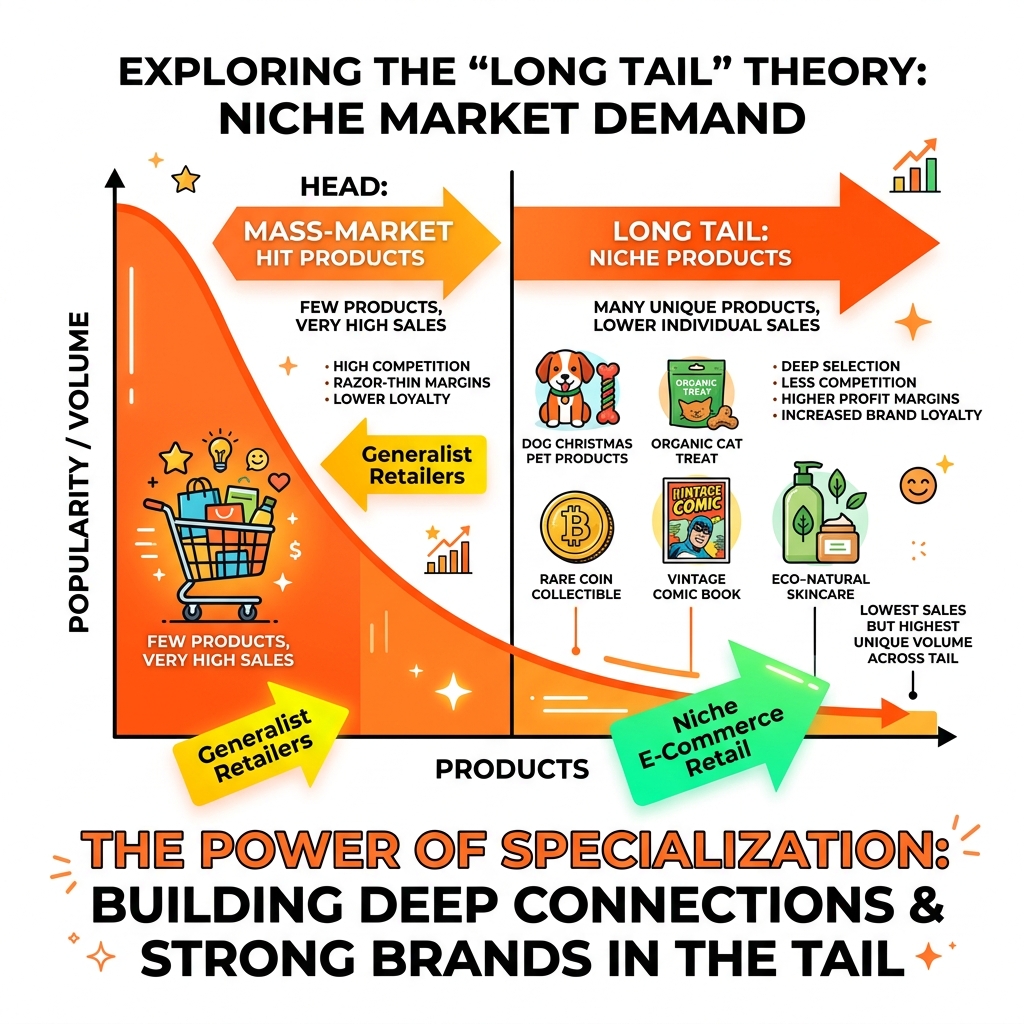
A niche approach fundamentally reduces competition. Instead of vying with global giants for every customer, we target a dedicated audience with specific interests and needs. This allows us to become the go-to expert in that particular domain. For instance, a store specializing in vintage comic book memorabilia will face different, and often less intense, competition than a general online bookstore. This specialization naturally leads to higher profit margins, as customers within a niche are often willing to pay a premium for products that precisely meet their unique requirements and passions.
Furthermore, focusing on a niche helps build strong brand authority and fosters deep customer loyalty. When a business consistently delivers high-quality, relevant products and exceptional service within a specific area, it establishes itself as a trusted expert. This expertise translates into a loyal customer base that not only makes repeat purchases but also becomes an advocate for the brand, driving organic growth through word-of-mouth. This community-building aspect is invaluable; customers feel understood and catered to, creating a powerful emotional connection with the brand. For example, a retailer catering to the specific needs of coin collectors, like a Numismatic niche e-commerce retail store, can build a dedicated following by offering rare finds and expert advice.
The benefits extend to marketing efficiency as well. With a clearly defined target audience, marketing efforts can be highly focused and personalized, leading to lower customer acquisition costs (CAC) and significantly higher conversion rates. Instead of broad, expensive campaigns, we can tailor our messaging to resonate deeply with the specific pain points, desires, and language of our niche audience. This precision ensures that every marketing dollar spent works harder, converting more browsers into buyers. The specialized expertise required to serve a niche also acts as a barrier to entry for potential competitors, further solidifying our market position.
Identifying a Profitable Niche E-Commerce Retail Segment
Selecting the right niche is paramount to success. It’s not about picking something obscure, but rather finding the sweet spot where consistent demand meets manageable competition and reliable supply. A winning niche typically exhibits several key characteristics:
- Consistent Demand: The market should show steady interest over time, not just a fleeting trend. Tools like Google Trends can help identify products or categories with sustained search volume, indicating a stable customer base.
- Low Saturation: While some competition is healthy (it validates demand), an overly saturated market makes it difficult to stand out. We look for areas where there’s room for new players to offer unique value.
- Reliable Supply Chains: Access to high-quality products from trustworthy suppliers is non-negotiable. Without a consistent and efficient supply chain, even the most promising niche will struggle.
- Passion-Driven Markets: Niches often thrive when they cater to a passionate audience. Hobbyists, collectors, and enthusiasts are typically more engaged, less price-sensitive, and more loyal.
- Problem-Solving Products: Products that address a specific pain point or fulfill an unmet need tend to perform exceptionally well.
- Repeat Purchase Potential: Niches with consumable products, accessories, or evolving collections (like collectibles) encourage customers to return, boosting customer lifetime value.
- High Average Order Value (AOV): Niches that allow for bundling, upselling, or selling higher-priced specialized items can significantly improve profitability.
By carefully evaluating these characteristics, we can identify a niche that not only aligns with our business goals but also offers a strong foundation for sustained growth.
High-Growth Categories and Sub-Niches for 2025-2026
The e-commerce landscape is dynamic, with consumer preferences constantly shifting. However, several overarching trends are creating fertile ground for niche opportunities in 2025-2026. These categories are not just growing; they are evolving, offering micro-niches for savvy entrepreneurs to explore.

One of the most powerful drivers is sustainability. Products marketed as sustainable have seen sales rise more than 30% over the past five years. This isn’t just a trend; it’s a fundamental shift in consumer values. Within this broad category, micro-niches abound: ethical production fashion, zero-waste home goods, upcycled accessories, and eco-friendly pet supplies. Consumers are actively seeking brands that champion transparent production and genuinely support ethical living.
The beauty and personal care sector continues its robust growth, particularly in direct-to-consumer (D2C) models. Online D2C beauty sales jumped 25% year over year, fueled by conscious consumers who prioritize transparency, clean ingredients, and sustainable packaging. This opens doors for niches like “clean beauty” for specific skin types, gender-neutral skincare, or even beauty products tailored to specific environmental conditions. A notable sub-niche is men’s grooming products, which saw online revenue grow by 5.6% for top retailers, outpacing general grooming. This indicates an underserved market ripe for specialized offerings like beard care for specific hair textures or natural skincare lines for active men.
The shift towards home-centric lifestyles has solidified the demand for home fitness equipment and smart home solutions. The home fitness equipment market was projected to reach $17.8 billion by 2023, and while gym closures are no longer the primary driver, convenience and personalized wellness continue to fuel this demand. Niches here could include specialized equipment for small spaces, adaptive fitness gear, or recovery tools for home use. Similarly, the kitchen appliance market is projected to grow from $245.45 billion in 2024 to $321.40 billion by 2029, with a CAGR of 5.53%. Within this, specific items like air fryers are expected to see a 7.0% CAGR from 2024 to 2028, pointing to micro-niches like smart kitchen gadgets for healthy eating or appliances for specific dietary needs.
Beyond the home, niche recreational markets are thriving. The golf equipment market is expected to generate around $25 billion in revenue, with an annual growth rate of 5.63% from 2024 to 2028. This presents opportunities for specialized golf apparel, training aids for specific swing types, or custom club fittings.
Finally, the recommerce market is experiencing significant expansion, with the U.S. segment expected to grow at a CAGR of approximately 14.5% from 2024 to 2030. This trend, driven by sustainability and affordability, creates niches in refurbished electronics, vintage fashion, and authenticated luxury resale. Consumers want value and responsible choices, pushing brands to combine affordability with environmental awareness.
Specialized Opportunities in Pet Care and Wellness
The pet products market is not just booming; it’s undergoing a profound transformation. Pet owners increasingly view their animal companions as family members, leading to an emotional buying trigger that drives significant spending. This sentiment fuels a robust market for specialized pet care and wellness products, offering numerous niche e-commerce opportunities.
The global pet supplements sector alone is projected to exceed $3 billion by 2030. This reflects a growing demand for products that support pets’ health and longevity, mirroring human wellness trends. Within this, sub-niches include:
- Specialty Pet Health: Products targeting specific conditions like joint pain, anxiety, or digestive issues for particular breeds or age groups.
- Organic and Natural Treats: A strong desire for wholesome, transparent ingredients drives demand for organic, grain-free, or single-ingredient pet treats.
- Personalized Pet Apparel and Accessories: Beyond basic collars, owners seek items that reflect their pet’s personality or their own style, from custom-engraved tags to breed-specific clothing.
- Functional Pet Foods: Foods formulated with specific health benefits, such as weight management, skin and coat health, or cognitive support.
- GPS Collars and Smart Pet Tech: As technology integrates into every aspect of life, smart devices for pet tracking, feeding, and entertainment are gaining traction.
- Subscription-Based Pet Supplies: Recurring delivery of food, treats, toys, or hygiene products tailored to a pet’s needs offers convenience and builds loyalty.
The emotional connection owners have with their pets means they are often willing to invest in products that promise comfort, health, and joy for their furry, feathered, or scaled friends. This market is far from saturated, especially for brands that can offer genuine quality, transparency, and a strong brand story.
A Data-Driven Process for Niche Selection and Validation
Launching a niche e-commerce store without thorough validation is akin to sailing without a compass. To maximize our chances of success, we employ a data-driven process that combines market insights with practical testing.
Our journey begins with Google Trends analysis. This tool is invaluable for gauging consistent demand and identifying emerging interest in potential niches. We look for steady or upward-trending search interest over several years, avoiding volatile spikes that might indicate fleeting fads. Complementing this, keyword research tools (like Ahrefs or Semrush) help us uncover specific search terms, their volume, and the level of competition. High search volume combined with relatively low competition for long-tail keywords often signals a promising niche.
Beyond search data, we delve into competitor analysis. Checking Amazon top-sellers (while logged out to avoid personalized results) provides a snapshot of what’s already performing well and how products are priced. Similarly, browsing social media ad libraries (like Meta Ad Library) reveals what competitors are advertising, their messaging, and the level of ad spend, offering insights into market saturation and effective marketing angles. Trend forecasting tools (like Exploding Topics) can even predict product popularity months in advance, giving us a head start.
Before committing significant resources, we conduct a self-assessment to align the niche with our interests, expertise, and resources. This is followed by a rigorous cost-profit-risk analysis. Using spreadsheets, we project potential revenues, estimate all costs (product, shipping, marketing, platform fees), and determine realistic profit margins. This helps us understand the financial viability of the niche.
Crucially, we advocate for testing with small-scale ads and product samples. Instead of launching a full store, we might run targeted social media ads for a specific product concept or collect email sign-ups for a pre-launch. Ordering product samples from potential suppliers allows us to verify quality, packaging, and delivery times before committing to larger inventory orders. This minimal investment approach helps validate demand and supplier reliability without significant financial risk.
Finally, be aware of niches that should be avoided, particularly in dropshipping or e-commerce, due to potential legal, advertising, or fulfillment challenges. These often include highly regulated products (e.g., pharmaceuticals, certain supplements, weapons), items with complex import/export restrictions, or products that face advertising bans on major platforms (e.g., adult products, tobacco, certain health claims). Avoiding these can save immense headaches and financial losses down the line.
Operational Infrastructure for Niche Success
The backbone of any successful niche e-commerce retail operation is a robust and efficient operational infrastructure. This is especially true for specialized markets where customer expectations for product quality, delivery speed, and overall experience are often higher.
One of the most transformative models for low-risk entry into niche markets is print-on-demand (POD). The POD market is expected to grow to $48.4 billion by 2032, with a yearly growth rate of 22.7% from 2024 to 2032. This model allows entrepreneurs to sell personalized products—from custom apparel and home decor to unique accessories—without holding any inventory. Platforms like Printful handle printing, packaging, and shipping directly to the customer once an order is placed. This significantly reduces upfront investment and eliminates inventory risk, making it an ideal choice for testing niche ideas or catering to highly specific interests (e.g., personalized gifts for specific hobbies or communities).
As a niche store scales, leveraging third-party logistics (3PL) providers becomes critical. Companies like ShipBob offer comprehensive fulfillment services, including warehousing, inventory management, and shipping. This allows niche businesses to outsource the complexities of physical logistics, freeing them to focus on product development, marketing, and customer engagement. 3PLs often have global fulfillment networks, enabling niche brands to reach international customers efficiently and cost-effectively, which is particularly valuable for specialized products that might have a dispersed audience.
For niches involving consumables or curated collections, subscription box models can be highly effective. These require a consistent fulfillment partner capable of managing recurring orders, kitting, and timely delivery. The predictable revenue stream from subscriptions can be a powerful engine for niche growth.
Seamless platform integrations are also essential for operational efficiency. E-commerce platforms like Shopify, Etsy, and even social commerce channels like TikTok Shop provide the storefront and sales infrastructure. Integrating these with POD services, 3PLs, and other tools (e.g., email marketing, customer service) creates a cohesive ecosystem. This omnichannel presence ensures that customers can discover and purchase products wherever they prefer, while backend operations remain streamlined. Excellent customer service, supported by efficient order processing and low refund rates, further reinforces brand loyalty and encourages repeat business in niche markets.
Scaling Your Niche E-Commerce Retail Brand
Scaling a niche e-commerce brand effectively requires meticulous attention to operational details, particularly inventory management. Key performance indicators (KPIs) like turnover ratio, safety stock, and stockout costs directly impact profitability. A healthy turnover ratio indicates efficient inventory movement, while adequate safety stock prevents lost sales due to unexpected demand spikes. Conversely, high stockout costs (lost revenue, customer dissatisfaction) and inventory shrinkage (due to damage, theft, or errors) can severely erode margins. Implementing real-time inventory visibility, often through integrated software, is crucial for making informed purchasing decisions and optimizing stock levels.
Warehouse optimization techniques, whether managed in-house or by a 3PL, ensure efficient storage, picking, and packing. This directly translates to faster fulfillment and reduced operational costs. Beyond the practicalities, enhancing the customer experience is vital for scaling. Branded unboxing experiences, through custom packaging or inserts, can elevate a niche product and create memorable moments that encourage sharing and repeat purchases.
For sustained growth, repeat customer strategies are paramount. Niche businesses thrive on loyalty. This involves personalized communication, loyalty programs, and exclusive offers. A high average order value (AOV) can be achieved through strategic product bundling or introducing complementary items. Visual storytelling across all marketing channels, coupled with micro-influencer partnerships within the niche community, can authentically reach and engage target audiences, driving both initial sales and long-term brand advocacy.
Frequently Asked Questions about Niche E-Commerce
Navigating niche e-commerce often brings up common questions for aspiring entrepreneurs. Here, we address some of the most frequently asked.
What are the best beginner-friendly niches for 2025?
For beginners, the best niches are typically those that require minimal investment and allow for a validation-first approach. Print-on-demand (POD) models are exceptionally beginner-friendly because they eliminate the need to purchase and store inventory. This means you can launch a store selling personalized t-shirts, mugs, phone cases, or even eco-friendly tote bags with unique designs without any upfront product costs.
Other low-risk options include eco-friendly home decor (e.g., sustainable candles, upcycled art prints) or personalized stationery (e.g., custom planners, unique greeting cards). With POD, you can test product ideas with as little as a $100 testing budget for initial marketing experiments, focusing on validating demand before scaling. The key is to find a niche that aligns with your interests, has a passionate audience, and allows for creative expression without the complexities of traditional inventory management.
How do I determine if a niche is too saturated?
Identifying a saturated niche is crucial for avoiding an uphill battle. Several indicators can help us assess market saturation:
- Overcrowded Search Results: If every search term related to your niche yields thousands of identical products from countless competitors, it’s likely saturated.
- Minimal Pricing Differences: When competitors are constantly undercutting each other with razor-thin margins, it suggests a race to the bottom, indicative of saturation.
- High Ad Costs: If the cost-per-click (CPC) for relevant keywords is exceptionally high, it means many businesses are bidding for the same attention, making it expensive to acquire customers.
- Lack of Unique Value Proposition: If you struggle to articulate how your product or brand is distinctly different or better than what’s already available, the niche might be too crowded to carve out a unique space.
Instead of avoiding popular categories entirely, look for micro-niche opportunities or market gaps within broader categories. For example, instead of “pet supplies,” consider “eco-friendly pet toys for large dogs” or “hypoallergenic cat treats.” These specialized sub-categories allow you to target a smaller but more dedicated audience, where competition is less fierce and your unique offering can truly shine.
Why is fulfillment critical for niche profitability?
Fulfillment is not just a logistical necessity; it’s a critical component of niche profitability and customer satisfaction. In niche markets, customers often have higher expectations because they are seeking specialized products. Poor fulfillment can quickly erode trust and lead to lost sales.
- Shipping Speed and Customer Expectations: With the rise of e-commerce, customers expect fast delivery, often within 2-day delivery expectations. Delays can lead to cancellations, negative reviews, and reduced repeat purchases. Efficient fulfillment, whether in-house or through a 3PL, ensures products reach customers promptly.
- Inventory Accuracy and Holding Costs: Precise inventory management prevents stockouts (which mean lost sales) and overstocking (which incurs high holding costs). Niche products can sometimes have longer shelf lives or specific storage requirements, making accurate tracking essential to minimize waste and optimize cash flow.
- 3PL Scalability and International Reach: As a niche business grows, a 3PL can provide the scalability needed to handle increased order volumes without significant capital investment in infrastructure. For specialized products, a 3PL with international capabilities can unlock global markets that would be challenging to serve independently, expanding the customer base and profitability.
- Customer Retention: A smooth, reliable fulfillment process contributes significantly to a positive customer experience. This translates into higher customer retention, which is far more cost-effective than constantly acquiring new customers. Low refund rates, often a result of accurate order fulfillment and quality control, also directly impact profitability.
Efficient fulfillment safeguards your brand’s reputation, optimizes operational costs, and directly contributes to the long-term profitability and growth of your niche e-commerce retail business.
Conclusion
The journey into niche e-commerce retail is a strategic move, offering a compelling alternative to the crowded general marketplace. As we’ve explored, success in this domain hinges on market agility, data-driven decisions, and a relentless focus on building a brand that resonates deeply with a specific audience.
By embracing the principles of specialization, entrepreneurs can unlock higher profit margins, reduce competition, and cultivate unparalleled customer loyalty. From the burgeoning demand for sustainable goods and specialized pet care to the intricate world of collectibles, the opportunities for growth in 2025-2026 are abundant and diverse. The key is to identify these high-growth categories, validate them with robust market research, and build a resilient operational infrastructure, whether through low-risk models like print-on-demand or scalable solutions offered by 3PL partners.
The future of e-commerce belongs to those who understand that in a world of endless choices, consumers crave curation, expertise, and authenticity. By committing to a niche, we not only differentiate our brand but also future-proof our business, fostering entrepreneurial growth and carving out a dominant position in our chosen market. The path to niche dominance is clear: research, specialize, and deliver exceptional value to a community that truly appreciates what you offer.
Related Posts:
- 3 Practical Tips For Starting An eCommerce Business
- The Right Way To Hire Employees For Your eCommerce Business
- Online Business Opportunities for Stay-at-Home Moms
