Honey adds a little sweetness to everyday family favorites, from morning oatmeal to a comforting cup of tea. It’s a convenient pantry staple for busy moms who want to add flavor to homemade meals without spending extra time in the kitchen.
However, heating honey can change its natural properties, including some of the compounds that contribute to its distinctive character. The extent of these changes depends on temperature and how long the honey stays warm. Knowing what happens during heating can help you make better choices when preparing family meals.
1. What Happens to Honey When You Heat It?
Honey contains natural sugars alongside small amounts of enzymes and aromatic compounds. These components influence its characteristics, although they don’t all respond to heat in the same way.
Gentle warming makes honey thinner and easier to pour, which comes in handy when you’re preparing homemade dressings or drizzling it over breakfast. Higher temperatures can gradually affect its chemical composition, particularly when heating continues for an extended period.
Some enzymes lose activity as temperatures rise, while delicate flavor compounds may change. However, stirring honey into warm tea exposes it to different conditions than boiling it directly in a saucepan.
The amount of heat matters, but the duration of exposure also influences how much honey changes.
2. How Does Heat Affect Honey’s Natural Enzymes?
Bees contribute enzymes as they turn flower nectar into honey. These proteins help drive chemical reactions during honey production and contribute to honey’s natural composition.
Diastase helps break down starches, while invertase converts sucrose into simpler sugars. Honey also contains glucose oxidase, which can produce hydrogen peroxide under suitable conditions.
The natural enzymes found in raw honey contribute to its distinctive composition, although their activity can decline when temperatures rise.
Because heat can reduce enzyme activity, researchers use it to assess honey’s quality and processing history. However, preserving these enzymes doesn’t necessarily make honey healthier. Honey still consists primarily of natural sugars, and the small amounts of enzymes it contains don’t substantially change its nutritional profile.
For everyday family meals, gentle handling can help preserve more of honey’s original characteristics without requiring major changes to your cooking routine.
3. Does Heating Honey Change Its Flavor?
Honey gets much of its flavor from the flowers bees visit. Clover honey often tastes mild, while buckwheat honey generally has a stronger character.
Heating can alter the delicate aromatic compounds responsible for these differences. You may notice the change when comparing honey straight from the jar with honey that has spent considerable time cooking in a sauce.
Higher temperatures can encourage browning reactions that produce deeper flavors. While those changes may complement certain recipes, they can reduce the floral notes that make a particular variety distinctive.
If you’re preparing a yogurt bowl or fruit topping, adding honey after the food cools slightly can help maintain its original taste.
Baking is different because honey adds moisture and affects browning. There’s no reason to abandon a favorite honey-sweetened muffin recipe, even though cooking changes some of the ingredient’s natural characteristics.
4. Is Warm Honey Different From Boiled Honey?
Temperature plays an important role in how honey responds to heating. A brief warm-water bath generally exposes honey to gentler conditions than boiling it directly.
Time matters as well. Even moderate temperatures can influence enzyme activity when honey remains warm for extended periods.
Researchers also monitor hydroxymethylfurfural, or HMF, when studying honey quality. This compound forms through reactions involving sugars, and its concentration can increase during prolonged storage or heating.
Scientists use HMF levels alongside other measurements when evaluating honey’s processing history. However, the presence of HMF doesn’t mean honey suddenly becomes unsafe when someone adds it to hot tea.
The distinction helps put everyday cooking into perspective. Heating can change honey’s composition without automatically making it unsuitable for consumption.
5. What’s the Best Way to Warm Crystallized Honey?
Finding a grainy jar in the pantry can feel frustrating when you’re trying to get breakfast ready before work. Fortunately, crystallization is normal and doesn’t automatically indicate spoilage.
Honey contains glucose and fructose, and glucose can gradually form crystals. The rate depends partly on the honey’s natural sugar composition.
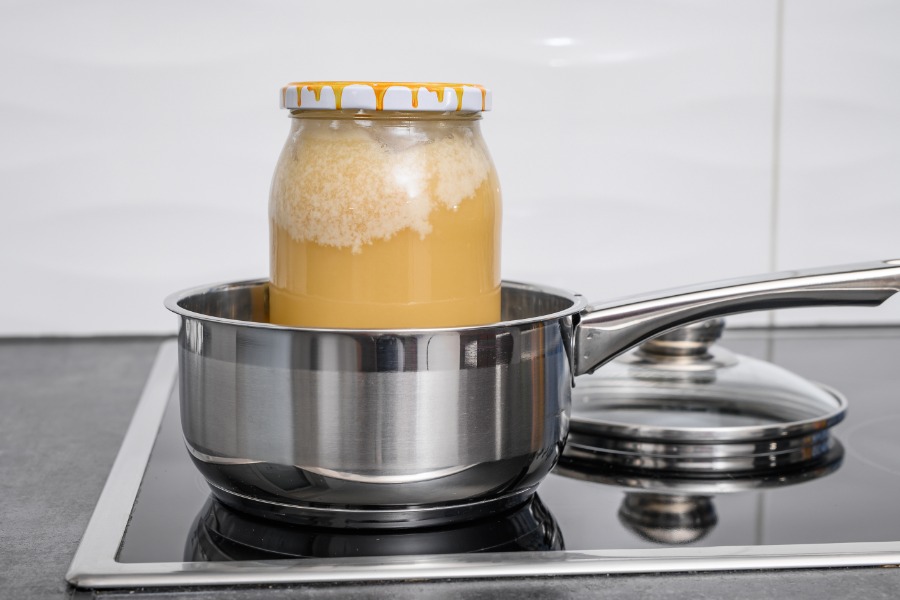
If your family prefers liquid honey, gentle warming can help dissolve those crystals without exposing the jar to intense heat.
How to Warm Honey Gently
- Prepare a warm-water bath. Fill a bowl with comfortably warm water, not boiling water.
- Place the closed jar inside. Keep the water below the lid to prevent moisture from entering.
- Allow the honey to soften. Replace the water as it cools and give the honey time to loosen.
- Stir when necessary. Use a clean spoon to help distribute the warmth once the honey becomes easier to move.
Avoid placing plastic containers in hot water unless the manufacturer confirms they can tolerate the temperature. Microwaving can also create uneven heating, making a warm-water bath a gentler option.
6. Should You Add Honey Before or After Cooking?
The best timing depends on what you’re making. If you want honey’s distinctive flavor to stand out, adding it toward the end of preparation may help preserve more of its aromatic qualities.
Consider a bowl of oatmeal. Cooking the oats first and stirring in honey once they cool slightly lets you adjust the sweetness without prolonged heating.
Homemade salad dressings offer another opportunity to use honey without exposing it to high temperatures. A small amount can balance tangy ingredients while maintaining the honey’s familiar flavor.
Baked recipes work differently because honey needs to mix evenly with the other ingredients before cooking. You can still use it successfully in muffins or quick breads, although baking changes some of its natural components.
Families should also keep age-related food safety in mind. Never give honey to children younger than 12 months because it can contain spores that cause infant botulism. Ordinary home cooking doesn’t reliably eliminate that risk.
7. How Should You Store Honey Between Uses?
Proper storage helps maintain honey’s quality long after you bring it home. Keep the container tightly closed in a dry pantry away from direct sunlight.
Excessive warmth can accelerate chemical changes, while moisture entering the jar may encourage fermentation. A kitchen cabinet away from the stove generally provides a suitable storage location.
There’s usually no need to refrigerate honey. Cooler temperatures can encourage crystallization in some varieties, making the contents harder to pour.
Use clean utensils whenever you scoop honey from the container. Introducing water or food particles can affect its stability, particularly during extended storage.
These simple habits fit easily into a busy household and can help you enjoy the same jar for longer.
Enjoy Honey Without Overcomplicating Your Routine
Honey brings natural sweetness to family meals, whether you’re preparing a quick breakfast or baking something special for the weekend. A little attention to temperature can help preserve its distinctive flavor without complicating everyday cooking.
Knowing how heating honey changes its natural properties helps you decide when gentle warming makes sense and when higher temperatures serve the recipe better. With a few simple habits, you can continue enjoying this familiar pantry favorite in ways that work for your family’s routine.
More tips about honey:
