Table of Contents
- Why Options Change After Bone Loss
- What Full-Arch Replacement Means
- Advanced Implant Options
- Who May Qualify
- The Consultation Process
- Questions to Ask
- Risks, Recovery, and Daily Care
- Cost Planning
- Common Questions
Being told there isn’t enough upper-jaw bone for traditional dental implants can be discouraging, especially for people tired of loose dentures or missing teeth. However, severe bone loss does not always mean that fixed tooth replacement is impossible. A complete examination may identify several paths forward, including treatment involving a zygomatic dental implant when the anatomy and overall health support that approach.
The right solution is highly individual. Bone volume, gum health, sinus anatomy, bite forces, medical history, smoking status, and long-term cleaning habits all affect treatment planning. A qualified surgical and restorative team can explain the alternatives, limitations, expected recovery, and maintenance needs before any decision is made.
Why Options Change After Bone Loss
After tooth loss, the jawbone may shrink because it no longer receives normal chewing forces through the roots. Periodontal disease, infection, trauma, aging, and long-term denture use can also reduce or alter the bone available in the upper jaw. Since traditional implants require adequate support, significant bone loss may change the initial recommendation.
However, one opinion is not necessarily final. Complex cases may benefit from evaluation by an oral and maxillofacial surgeon and a restorative dentist or prosthodontist experienced in coordinating full-arch care. Detailed imaging is essential to assess remaining bone, sinus spaces, and other structures that a basic examination cannot fully evaluate.
What Full-Arch Tooth Replacement Means
A full-arch restoration replaces all teeth in the upper jaw, lower jaw, or both. It may be a fixed, implant-supported bridge or a removable, implant-retained denture. Fixed restorations require professional removal, while removable options can be taken out for cleaning.
For suitable patients, implant-supported teeth may improve eating and speaking stability compared with conventional dentures. Treatment often includes temporary teeth during healing, followed by a final restoration once healing, bite, appearance, and function are satisfactory.
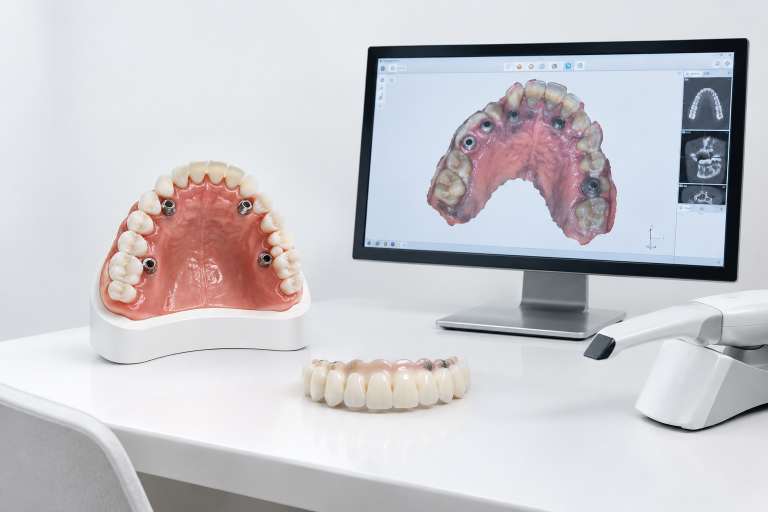
Advanced Implant Options for Complex Cases
Conventional Implants With Bone Grafting
Bone grafting may be used to build or preserve support before conventional implant placement. Depending on the case, treatment can involve multiple stages and months of healing. Patients should ask what material is proposed, whether sinus-related treatment is involved, how healing will be monitored, and whether additional procedures could become necessary.
Short or Angled Implants
In some cases, implant length, position, or angle can be adjusted to use available bone more effectively. This does not make every patient eligible for treatment. The restoration design, chewing forces, bone quality, and ability to clean around the final teeth remain important considerations.
Zygomatic and Remote-Anchorage Implants
When upper-jaw bone loss is severe, some treatment plans use implants anchored in stronger facial bone outside the resorbed areas. The treatment option for patients with severe bone loss, as described by oral and maxillofacial surgeons, may be considered for carefully selected individuals. These are advanced procedures requiring detailed three-dimensional planning, specialized training, and a clear plan for managing complications.
Who May Qualify for Advanced Treatment?
Age by itself does not determine candidacy. Instead, the care team typically reviews the location and quality of remaining bone, current gum or infection concerns, sinus health, previous implant treatment, medications, and medical conditions that may affect healing. Tobacco use and uncontrolled health conditions can increase treatment risks and should be discussed openly.
Successful long-term care also depends on practical factors. Patients need to be comfortable attending follow-up appointments, cleaning around the restoration as instructed, and promptly reporting new symptoms. Expectations about appearance, chewing, treatment length, and maintenance should be discussed before surgery.
What Happens During the Consultation?
- Health review: Medical history, medications, allergies, and prior dental treatment are reviewed.
- Oral examination: The team assesses teeth, gums, bite, jaw movement, and signs of infection.
- Three-dimensional imaging: Scans help map bone, sinus spaces, and nearby anatomy.
- Restorative planning: Tooth shape, shade, bite position, speech, and access for cleaning are considered.
- Informed decision-making: Alternatives, fees, risks, anesthesia options, and recovery expectations are explained.
Questions to Ask Before Treatment
- Which options fit my current bone structure and health history?
- Why is this approach recommended instead of grafting or conventional implants?
- What training and experience does the surgical team have with complex full-arch cases?
- Will temporary teeth be available during healing?
- Where will treatment take place, and what type of anesthesia may be used?
- What complications are possible, and how would they be managed?
- What cleaning tools and professional maintenance will the final teeth require?
- What is included in the written estimate, including adjustments or repairs?
Risks, Recovery, and Daily Care
All implant procedures carry risks that should be discussed beforehand, including swelling, bruising, discomfort, infection, inflammation around implants, sinus issues in upper-jaw cases, bite changes, loose components, and difficulty cleaning beneath a fixed bridge. Consensus guidance on edentulous maxilla care also stresses careful patient selection, appropriate training, and ongoing outcome evaluation.
Recovery planning should cover transportation after sedation, time away from strenuous activities, medications, dietary instructions, and follow-up appointments. Contact the clinical team promptly for worsening swelling, fever, drainage, severe pain, breathing problems, or any symptom listed in the post-operative instructions.
How to Plan for Treatment Costs
Complex full-arch care can include imaging, surgical fees, anesthesia, temporary teeth, laboratory work, the final restoration, and follow-up visits. Request a complete written estimate and ask whether adjustments, hygiene visits, replacement components, repairs, or future restoration are included. Insurance coverage and financing terms should be reviewed carefully, but price alone should not determine the choice of a complex surgical procedure.
Common Questions
Can someone with severe bone loss still receive implant-supported teeth?
Some people may qualify for advanced treatment. Eligibility depends on imaging findings, health history, oral conditions, surgical risk, and the treatment team’s assessment.
Are advanced implants better than bone grafting?
Neither is automatically better. The appropriate approach depends on anatomy, goals, healing considerations, risk tolerance, and the long-term maintenance plan.
Can fixed teeth be placed on the day of surgery?
Temporary fixed teeth may be possible in selected cases. The decision depends on implant stability, bite forces, surgical findings, and the provider’s protocol.
Final Takeaway
Severe upper-jaw bone loss can complicate treatment, but it does not automatically rule out every option for implant-supported teeth. The safest next step is a thorough evaluation, a candid conversation about alternatives and risks, and a plan centered on long-term health, function, and maintainability.
More posts about Tooth Replacement options:
- Same-Day Dental Implants: A Practical Guide To Candidacy, Planning, And Recovery
- What to Expect During the Dental Implant Procedure
- Importance of Oral Health: How Dentures Can Boost a Person’s Quality of Life?
