Table of Contents
- Introduction
- Flexibility and Convenience of Online Learning
- Expanding Career Opportunities
- Increased Earning Potential
- Specialization and Advanced Knowledge
- Leadership and Management Roles
- Networking and Professional Development
- Conclusion
Introduction
In today’s rapidly evolving healthcare environment, nurses are continually challenged to adapt and expand their skill sets to meet complex patient needs. Pursuing an online MSN degrees can be a strategic move for nursing professionals committed to career advancement and personal growth. Online options provide enhanced accessibility, allowing working nurses to pursue advanced credentials without putting their current careers on hold or compromising personal commitments.
An online MSN can empower you to step into advanced clinical, educational, and administrative roles. This article delves into the transformative benefits of earning an online MSN, including increased flexibility, higher earning potential, and career opportunities, as well as specializations that align with your career vision.
Flexibility and Convenience of Online Learning
One of the most significant advantages of choosing an online MSN program is the unparalleled flexibility it offers. Many online MSN programs use asynchronous learning models, allowing you to complete coursework at your convenience rather than adhering to rigid class schedules. This format is ideal for nurses who work irregular hours or those with demanding personal responsibilities.
The flexibility of online learning makes advanced education accessible to a wider range of nurses, including those in rural areas or with family commitments. By removing geographic barriers and providing greater control over your educational journey, online MSN programs enable more nurses to reach their professional goals without sacrificing their current roles.
Expanding Career Opportunities
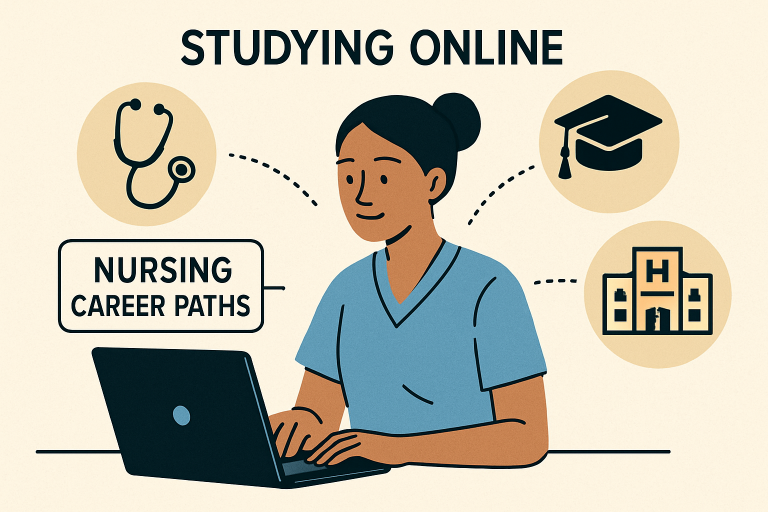
An MSN unlocks a wide array of career paths beyond those available to registered nurses with only an associate or bachelor’s degree. With an MSN, you can pursue advanced positions such as nurse practitioner, nurse educator, nurse administrator, and clinical nurse leader, among others. These advanced roles are specifically designed to place you in positions where you can make meaningful contributions at the bedside and beyond, including influencing healthcare policy, developing curricula, and leading quality improvement initiatives.
Increased Earning Potential
Nurses with an MSN degree are well-positioned for higher salaries than those with only a bachelor’s degree. For instance, the U.S. Bureau of Labor Statistics reports that the median annual salary for nurse practitioners—a common role for MSN-prepared nurses—was $121,610 in 2022, significantly higher than registered nurses’ earnings. MSN-prepared nurses can also progress to director-level or executive roles, where salaries and benefits are even more competitive, reflecting their expertise and leadership responsibilities. Investing in an online MSN not only elevates your earning potential but also provides greater job stability in a dynamic healthcare market, especially as more states recognize advanced practice nurses as primary care providers.
Specialization and Advanced Knowledge
One of the most compelling reasons to consider an online MSN is the opportunity to focus on a specialty area that aligns with your interests and career goals. Whether you’re passionate about family practice, acute care, psychiatric-mental health, pediatric nursing, or nurse education, MSN programs often offer tracks and electives tailored to these specialties.
Specialization enables you to deliver expert care to specific populations and can enhance your competitiveness in the job market. As healthcare systems increasingly prioritize specialized care, nurses who have honed advanced clinical or instructional skills through an MSN will stand out as invaluable assets within their organizations. Further, advanced coursework and clinical experiences deepen your understanding of evidence-based practice, research, leadership, and interprofessional collaboration—cornerstones of quality healthcare delivery.
Leadership and Management Roles
Leadership development is another core component of many MSN programs. An MSN equips nurses with the advanced competencies required to succeed in management and executive roles, such as Nurse Manager, Director of Nursing, or Chief Nursing Officer. These roles involve overseeing clinical staff, budgeting, policy-making, and implementing best practices to ensure high-quality patient care.
As healthcare organizations strive for better patient outcomes and greater operational efficiency, demand is rising for nurse leaders who possess both clinical expertise and business acumen. MSN-trained leaders play a pivotal role in shaping workplace culture and driving system-wide change.
Networking and Professional Development
Earning your MSN online doesn’t mean you’ll miss out on building lasting professional connections. Many online MSN programs encourage collaboration among students from varied backgrounds and geographic locations, fostering an environment rich in shared perspectives and ideas. Interactive forums, group projects, and case studies help you develop a professional network that can serve as a resource throughout your career.
Beyond coursework, online students are often encouraged to join professional organizations, attend virtual conferences, and pursue continuing education opportunities. These activities keep you abreast of emerging trends in nursing and can be pivotal in expanding your professional opportunities long after graduation.
Conclusion
An online Master of Science in Nursing is more than an academic credential—it’s a catalyst for career transformation. Whether you aim to specialize in a clinical field, lead healthcare teams, or educate the next generation of nurses, an online MSN provides the flexibility, expertise, and professional connections essential for sustained career growth. With the evolving demands of healthcare, taking the step toward an MSN can secure your place as a leader and innovator in the nursing profession.
