Key Takeaways
- Prioritize safety, seek medical attention, and document the accident as soon as reasonably possible.
- Preserve photographs, videos, witness details, police reports, and other evidence that may help establish fault.
- Keep medical records and follow-up documentation to help connect the accident to the injuries being claimed.
- Organize records of medical expenses, lost income, property damage, and other accident-related losses.
- Communicate carefully with insurance companies and review settlement terms before accepting an offer or signing a release.
- Avoid common mistakes such as speculating about fault, discarding evidence, posting accident details on social media, or delaying the collection of time-sensitive footage.
- Seek legal guidance early to understand applicable deadlines, evaluate shared responsibility, and address claims involving multiple parties or complex circumstances.
- Nevada’s crash reports and public data can provide useful context, but evidence specific to the incident remains essential to establishing an individual claim.
After an accident, proving that another person or business was responsible can be just as important as documenting the injury itself. A personal injury claim generally depends on reliable facts, preserved evidence, and a clear explanation of how the incident caused measurable harm. Reviewing the situation with a legal professional, such as the team at boyerlawyer.com, can help an injured person understand what information may matter before it disappears. Fault is not always determined by one photograph, one witness, or one statement made at the scene. An attorney can evaluate the available evidence, identify gaps in the record, communicate with insurers, and build a fact-based account of what happened. The following steps are especially relevant after vehicle collisions, but many also apply to slip-and-fall incidents, unsafe-property claims, and other injury cases.
Protect Safety and Preserve the Scene
Safety comes before evidence collection. Call for emergency assistance when someone may be injured, when traffic poses a danger, or when the scene is unsafe. If vehicles can be moved safely after a property-damage-only collision, moving them out of traffic may reduce the risk of another crash. Nevada drivers should also be aware that the state’s crash-reporting requirements may require an SR-1 report within 10 days when a qualifying crash was not investigated by law enforcement. Once immediate safety issues are addressed, avoid arguing about blame. Exchange identifying and insurance information, note the location and time, and take photographs if safe to do so. A calm record made close to the event is usually more useful than trying to recreate details weeks later.
Seek Medical Care and Document Symptoms
Prompt medical attention serves two purposes. It helps protect the injured person’s health, and it creates a contemporaneous record of reported symptoms, examinations, diagnoses, and recommended treatment. Pain, dizziness, numbness, headaches, reduced movement, or confusion should be discussed with an appropriate medical professional. Medical records do not establish fault by themselves. They can, however, help connect an accident to the injuries being claimed. Follow treatment advice when possible, attend follow-up appointments, and accurately report changes in symptoms. If a delay in care occurs, it is often helpful to keep a clear record of why it occurred.
Collect Evidence That Supports Fault
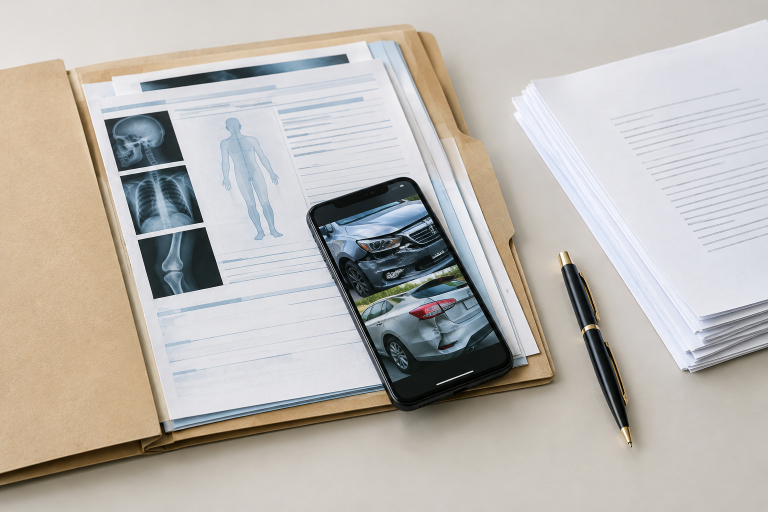
Evidence is most persuasive when it helps answer practical questions, such as: Where did the incident happen? What were the conditions? Who saw it? What did each person do immediately before the injury? An attorney may use several forms of evidence to answer those questions.
- Photos or video of vehicles, property conditions, traffic controls, debris, lighting, and visible injuries.
- Witness names, contact information, and brief notes about what each person observed.
- Police reports, incident reports, dispatch records, and tow or repair records.
- Surveillance, doorbell-camera, dash-camera, or nearby business footage.
- Damaged clothing, helmets, equipment, or other physical items that should not be discarded.
- Weather, road, maintenance, or inspection information when those conditions may be relevant.
A wide photograph of an intersection, for example, may show lane positions, signage, sightlines, and signal placement that a close image of bumper damage cannot. Preserving original files is important because screenshots or edited images may omit useful details.
Connect the Evidence to the Legal Issues
Proving fault commonly involves showing that a person or organization had a responsibility to act with reasonable care, failed to meet that responsibility, and caused harm as a result. In a vehicle case, the analysis may involve whether a driver obeyed traffic rules, watched the roadway, yielded when required, or adjusted for conditions. In a property case, the issues may include whether a dangerous condition existed and whether the responsible party knew or reasonably should have known about it. An attorney can organize evidence into a coherent timeline rather than relying on isolated facts. This may include comparing witness accounts with photographs, physical damage, medical documentation, phone records, or available video. The other side may dispute how the event occurred, whether the injury resulted from it, or whether the injured person shared some responsibility. Those issues need careful, fact-specific analysis.
Handle Insurance Communications Carefully
Insurance adjusters may request information soon after an accident. It is reasonable to report basic facts, but people should avoid guessing about speed, distance, injuries, or future medical needs. A recorded statement can become part of the claim file, so accuracy matters. Before accepting an early settlement or signing a release, consider whether the full extent of medical treatment, lost income, property damage, and future needs is known. A release can limit the ability to seek additional payment later. An attorney can review communications, evaluate an offer, and respond with supporting documentation when appropriate.
Keep Records of Losses and Recovery
A simple claim file can make it easier to show both fault and damages. Keep copies of medical bills, treatment notes, prescriptions, repair estimates, insurance letters, pay records, receipts for travel to appointments, and photographs. A dated journal may also help document daily limitations, missed activities, and the progression of symptoms. For broader context about traffic risks and fatal crashes in the state, Nevada’s public crash data dashboard provides statewide information that can be filtered by behavior and location. That information does not prove fault in an individual case, but it may help people understand why careful driving and prompt preservation of evidence matter.
Avoid Common Mistakes
- Leaving before exchanging information or obtaining help when the scene is dangerous.
- Admitting fault or speculating about uncertain details.
- Posting about the accident, activities, or injuries on social media.
- Throwing away damaged items, receipts, or medical paperwork.
- Waiting too long to request video footage that may be overwritten.
- Accepting a settlement before understanding its terms and consequences.
Address Cases With Added Complexity
Some claims require faster action or additional investigation. Commercial truck, bus, rideshare, motorcycle, bicycle, pedestrian, hit-and-run, and uninsured-driver cases may involve multiple insurance policies or responsible parties. A crash involving defective equipment may raise questions about a manufacturer, repair facility, or vehicle owner. Cases involving children or people with serious injuries may also require special attention to future care and legal procedures.
Act Before Important Deadlines Pass
Deadlines can affect insurance claims, evidence preservation, notices to government entities, and court filings. The applicable deadline depends on the jurisdiction, type of claim, and parties involved. Contacting an attorney early can allow time to preserve video, inspect vehicles or property, identify witnesses, and evaluate the case without waiting until a deadline is close.
Frequently Asked Questions
What if the other person says the accident was my fault?
Do not try to resolve the dispute through an argument at the scene. Preserve photographs, witness information, reports, and other objective evidence. Fault may be evaluated from the complete record, not simply from one person’s accusation.
Can I still have a claim if I was partly responsible?
Possibly. The effect of shared responsibility depends on the facts and the law that applies to the claim. A lawyer can explain how comparative fault or similar rules may affect a particular situation.
How long should I keep accident-related records?
Keep them until the claim, treatment, repairs, and any related legal issues are fully resolved. Digital copies stored in multiple locations can help prevent accidental loss.
Conclusion
Proving fault requires more than simply stating that another person caused an injury. It involves gathering reliable evidence, establishing what happened, and showing how another party’s actions or failure to act contributed to the incident. Timely medical documentation, photographs, witness statements, incident reports, and preserved physical evidence can all help support the account of what occurred. Organized records of medical expenses, lost income, rehabilitation costs, and other related losses may also help demonstrate the injury’s financial and personal effects. Because important details can become harder to verify over time, keeping relevant documents and information in one place is valuable. Early legal guidance can help injured individuals understand their options, preserve important evidence, meet applicable deadlines, and make informed decisions as the claims process progresses.
More tips about personal injury cases:
