Building physical confidence starts with giving children frequent opportunities to move their bodies in playful ways. Gross motor skills involve large muscle groups that support actions such as walking and climbing while maintaining balance. Children develop these abilities through practice and everyday movement. Parents can encourage progress without turning physical activity into a formal lesson or creating unnecessary pressure. When you understand how to improve your child’s gross motor skills, you can create experiences that strengthen coordination while helping your child feel capable during play.
Make Active Play Part of the Daily Routine
Children need regular movement to strengthen the muscles that support gross motor development. Rather than reserving physical activity for special outings, make active play a normal part of each day. Give your child time to move indoors or outside, depending on space and weather.
Games can encourage children to use their bodies. Invite your child to march across a room, crawl under a table, or follow you through the yard. You can also turn routine transitions into movement opportunities. Ask your child to hop toward the bathroom before brushing their teeth or walk like a favorite animal on the way to the playroom.
Practice helps movement feel natural. Keep activities lighthearted so your child associates physical activity with enjoyment instead of performance.
Encourage Plenty of Outdoor Movement
Outdoor environments give children more room to practice movements. A backyard, playground, or open park can provide opportunities that are difficult to recreate inside. Encourage your child to run across open areas, climb age-appropriate playground equipment, and walk over different surfaces.
Natural surroundings can also challenge balance in useful ways. Walking across grass requires different body adjustments than walking on a smooth floor. Slopes encourage children to control their speed while strengthening their legs. These experiences help children learn how their bodies respond to changing environments.
Allow your child to repeat favorite activities. Repetition gives children time to refine movements and build confidence before moving on to harder challenges.
Create Simple Obstacle Courses
An obstacle course can make motor practice feel like an adventure. Use household objects to create a path that encourages different movement. Children might step over cushions before crawling through a cardboard tunnel. You can adjust the course based on your child’s abilities and age while accounting for available space.
Focus on movements your child can attempt safely while still experiencing a manageable challenge. For example, place a low object on the floor for your child to step over rather than asking for a large jump. As your child becomes more comfortable, slightly increase the difficulty.
Changing the course keeps the activity interesting. Let your child help arrange the obstacles as well. Participating can increase enthusiasm for completing the course afterward.
Practice Balance Through Play
Balance supports many everyday movements, from walking confidently to climbing stairs. You can help your child practice balance without specialized equipment. Place a strip of painter’s tape on the floor and encourage your child to walk along it. Pretending the line is a bridge can make the activity more engaging.
Standing on one foot develops balance and body awareness. Younger children may need to hold your hand at first. Gradually offer less support as their stability improves. Never rush this process, since confidence often develops alongside physical control.
Playgrounds also offer natural balance challenges. Low stepping platforms and sturdy climbing structures encourage children to shift their weight while controlling their movements.
Use Balls To Build Coordination
Ball play encourages children to coordinate their arms and legs with their vision during movement. Start with a large, lightweight ball that your child can easily handle. Rolling the ball back and forth provides an accessible starting point before throwing or catching becomes comfortable.
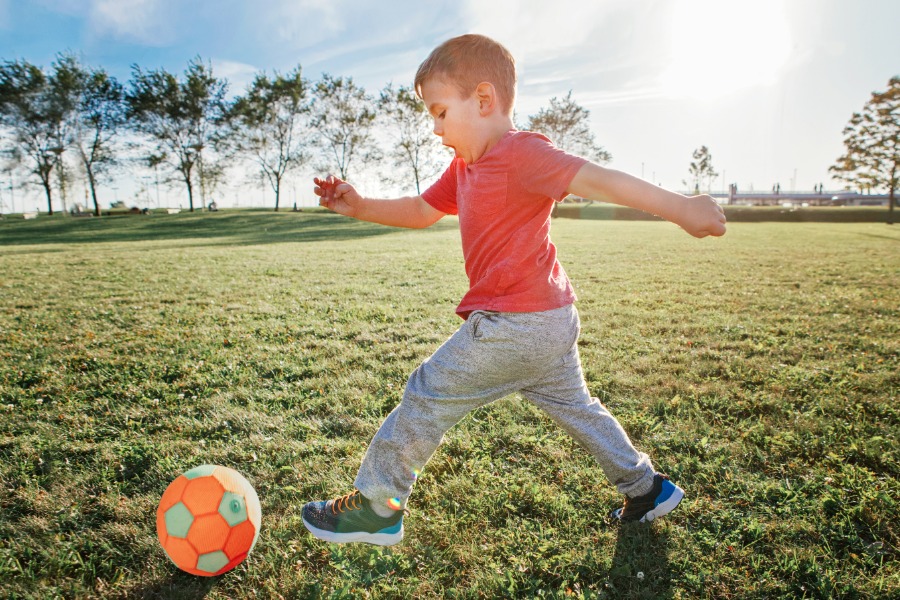
Kicking offers another useful gross motor activity. Place the ball close to your child and encourage a gentle kick toward an open target. As coordination improves, increase the distance slightly. Keep focus on participation rather than accuracy.
Catching can take time to develop. Begin with short distances and soft balls that are easy to grasp. Positive encouragement can help children remain interested even when the ball frequently slips away.
Introduce Riding Activities
Ride-on toys can strengthen the legs while helping children practice steering and spatial awareness. Choose equipment that matches your child’s size and developmental stage. Their feet should reach the appropriate supports comfortably, and the toy should feel stable during use.
When choosing the best ride-on car, consider how easily your child can control its movement and whether the design suits the intended play area. Start on a flat, open surface where your child has room to practice without navigating difficult obstacles.
Supervise riding activities closely. As your child gains control, riding can become an enjoyable way to practice movement while building confidence in navigating space independently.
Encourage Climbing Safely
Climbing requires children to coordinate several large muscle groups while planning each movement. Age-appropriate playground structures offer useful opportunities to practice. Stay close enough to provide support when necessary, but allow your child to complete manageable movements independently.
At home, you can create safer low-level climbing experiences with sturdy equipment designed for children. Choose stable furniture and surfaces specifically designed for active play. The goal is to provide a controlled challenge rather than encourage risky movement.
Climbing can also teach children to judge distance and position their bodies carefully. With practice, they may become more confident moving through playground environments.
Follow Your Child’s Pace
Children develop physical abilities at different rates, so avoid turning gross motor practice into a comparison. Pay attention to what your child enjoys and which activities feel frustrating. An activity that feels too difficult may discourage participation, while an activity that feels achievable can inspire repeated practice.
Offer encouragement for effort rather than praising only successful outcomes. If your child struggles with a movement, simplify the activity and let them try again later. Short, positive experiences often work better than lengthy practice sessions.
You can also model movements yourself. Children often enjoy copying adults, especially when the activity feels playful. Join the game, demonstrate the movement, and celebrate the shared experience.
Build Stronger Movement Skills Through Everyday Play
Helping children become stronger movers does not require complicated exercises or expensive equipment. Consistent opportunities for active play allow them to strengthen muscles while learning how to control their bodies. Keep activities appropriate for your child’s abilities and provide supervision when needed. Above all, make movement enjoyable. By learning how to improve your child’s gross motor skills, you can support physical development while encouraging a positive relationship with active play that can continue as your child grows.
More tips on developing motor skills:
